Flight Delayed in Europe? Your Rights and How to Claim Compensation Step by Step
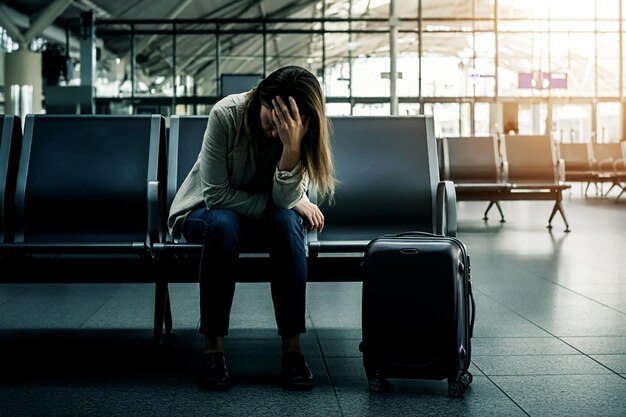
You’re at the airport. The boarding time has come and gone. The screen flips from “On Time” to “Delayed”… then again… and again. Hours pass, plans are ruined, and stress builds.
What many travelers do not realize is that in Europe, you often have clear legal rights to compensation and assistance when your flight is delayed or canceled—sometimes worth hundreds of euros.
This guide walks you through:
- What your passenger rights are under European rules
- When you can get flight delay compensation (and when you can’t)
- How much you might be entitled to
- A step-by-step process to file a claim yourself
- Practical tips to make airlines take your claim more seriously
Understanding Your Basic Air Passenger Rights in Europe
In Europe, air passenger rights are largely governed by a well‑known regulation that applies across EU countries, plus a few non‑EU states that have adopted similar rules. These rules are designed to protect you when things go wrong with your flight.
When European rules generally apply
You are typically protected if:
- Your flight departs from an airport in an EU country, or
- Your flight arrives in an EU country on an EU-based airline
This often covers:
- EU countries
- Some non‑EU countries in Europe that follow the same rules (for example, certain members of the European Economic Area)
If your flight is outside these areas or conditions, different rules may apply, often depending on the country or the airline’s policies.
What types of disruptions are covered?
European air passenger rules usually cover:
- Flight delays
- Flight cancellations
- Denied boarding (for example, due to overbooking)
- Downgrading (when you’re placed in a lower cabin class than you paid for)
This article focuses on flight delays, but much of the process overlaps with how you’d claim compensation for cancellations or denied boarding.
Are You Eligible for Flight Delay Compensation?
Not all delays lead to compensation. European rules draw a line between normal operational issues (where you may be entitled to money) and extraordinary circumstances (where you may not).
Key conditions for compensation
You may be entitled to financial compensation if:
- You arrived late at your final destination by a substantial number of hours (often 3 hours or more), and
- The delay was not caused by extraordinary circumstances outside the airline’s control, and
- Your flight fell under the geographical scope described earlier.
The term “final destination” is crucial: if you had connecting flights on a single ticket, it’s the arrival time at the end of the journey that usually matters, not just one leg of the trip.
What are “extraordinary circumstances”?
These are events generally considered outside the airline’s control, such as:
- Severe weather conditions that make flying unsafe
- Air traffic control restrictions
- Political unrest or security risks
- Sudden airport closures
- Certain types of strikes not related to the airline’s own staff
On the other hand, issues often considered within the airline’s control can include:
- Most technical and mechanical problems
- Crew scheduling problems
- Operational or staffing issues within the airline
The boundary is not always crystal clear in practice, and airlines sometimes classify more issues as “extraordinary” than passengers or regulators might agree with.
How Much Flight Delay Compensation Can You Claim in Europe?
The amount of compensation usually depends on flight distance and, in some cases, length of delay and route.
Here’s a simplified overview:
| Flight Distance (approx.) | Typical Route Examples | Possible Compensation Range* |
|---|---|---|
| Up to 1,500 km | Short‑haul within Europe | Lower tier |
| 1,500���3,500 km | Many medium‑haul routes (e.g., EU to North Africa) | Middle tier |
| Over 3,500 km | Long‑haul (e.g., EU to the Americas/Asia/Africa) | Higher tier |
*Exact euro amounts are set in the regulation and are standard across the EU, but this table keeps amounts descriptive rather than numerical, in line with the guidelines of this article.
When the compensation can be reduced
In some situations, if the airline offers you an alternative flight that gets you to your destination with a relatively small delay compared to your original arrival time, the compensation amount can be reduced. The conditions around this are quite specific and may vary depending on distance and delay.
Your Immediate Rights During a Delay
Even before you think about cash compensation, you usually have “right to care” protections when your flight is significantly delayed.
Right to meals, refreshments, and communication
After a certain length of delay (often a few hours, depending on flight distance), airlines generally must provide:
- Meals and refreshments (often via vouchers or direct service)
- Access to communication, such as:
- Phone calls
- Emails
- Messages
The duration of delay that triggers these rights depends on the length of your flight, but as a rule of thumb, longer delays and longer routes are more likely to qualify.
Hotel accommodation and transport
If the delay means you have to stay overnight, you are typically entitled to:
- Hotel accommodation
- Transport between the airport and the hotel
In practice, airlines sometimes instruct passengers to make their own arrangements and claim reimbursement later, while others organize accommodation directly. Keeping receipts becomes very important in these cases.
Right to a refund or re‑routing (in some cases)
If the delay becomes so severe that your flight is effectively not going to happen as planned (for example, an extremely long delay that turns into a cancellation or a significant schedule change), you may be given a choice between:
- A refund of the unused ticket (and sometimes the used portion if the trip no longer serves its purpose), or
- Re‑routing to your destination at the earliest opportunity, or at a later date convenient to you (subject to seat availability).
Step-by-Step: How to File a Flight Delay Compensation Claim in Europe
Filing a claim can feel intimidating, but the process usually follows clear steps. Many travelers successfully handle it on their own without paid intermediaries.
1. Collect and keep all documentation
As soon as your flight is delayed, start a paper trail:
- Boarding pass and booking confirmation
- Email or SMS notifications from the airline about the delay
- Photos of airport screens showing delay/cancellation
- Receipts for:
- Food and drinks (if not provided by the airline)
- Hotels and transfers
- Any necessary extra expenses caused by the delay
- Notes of what airline staff told you at the gate or service desk
Having detailed records strengthens your claim and makes it easier to prove what happened.
2. Confirm whether your flight is covered
Check:
- Departure and arrival airports (is at least one in an EU country?)
- Airline (EU carrier or non‑EU carrier?)
- Final destination (and your total arrival delay in hours)
- Whether the airline has referred to extraordinary circumstances
Many official aviation authority websites and consumer organizations provide distance calculators and basic eligibility checklists that you can use as a reference.
3. Work out what you might be entitled to
Consider:
- How many hours late you landed at your final destination
- Approximate flight distance
- Whether the airline offered re‑routing, vouchers, or alternative flights
- Whether you received meals, hotel, or other assistance
From there, you can estimate whether your situation fits the standard compensation tiers and whether you may claim reimbursement of reasonable expenses (for example, food and hotel that the airline should have covered).
4. Contact the airline directly
Most airlines prefer that you submit claims through:
- An online claims form (often under “customer service” or “complaints”)
- A customer relations email address
- In some cases, a postal address for formal complaints
When you write your claim, it often helps to:
- Include your full name, contact details, and booking reference
- State flight number, date, and route
- Clearly mention that you are claiming compensation for flight delay under European air passenger rights
- Specify:
- Your scheduled departure and arrival times
- Your actual departure and arrival times
- The length of the delay at your final destination
- Cite whether you were offered assistance (meals, hotel, re‑routing) and whether you had to pay out of pocket
- Attach scans or clear photos of documents and receipts
📝 Tip: Keep your tone polite but firm. Clear, factual, and well‑organized claims are often taken more seriously.
5. Be prepared for the airline’s response
Airlines may:
- Approve your claim and offer compensation
- Partially approve (for example, reimbursing some expenses but disputing cash compensation)
- Reject your claim, often stating that the delay was caused by “extraordinary circumstances”
If the airline rejects your claim or doesn’t respond within a reasonable time, you can usually escalate the complaint.
6. Escalate to a national enforcement body or dispute scheme
In Europe, each country typically has a national enforcement body (NEB) responsible for air passenger rights. You can often:
- Submit a complaint form (online or by mail)
- Provide copies of communication with the airline
- Include supporting documents
Some countries also have:
- Alternative dispute resolution (ADR) schemes
- Ombudsman services or consumer mediators
These bodies do not always guarantee a specific outcome, but they can review your case, request information from the airline, and in some cases issue decisions or recommendations.
7. As a last resort, consider legal routes
If you believe you have a strong case and the airline refuses to pay, travelers sometimes pursue:
- Small claims procedures in relevant courts
- Legal representation or consumer rights organizations
This step depends heavily on the country, the value of the claim, and your willingness to invest time and potentially money. Many people choose this route only when the compensation amount is significant.
Practical Checklist: What To Do When Your Flight Is Delayed ✈️
Here’s a quick, skimmable summary you can keep handy:
At the airport
- ✅ Keep your boarding pass and booking confirmation
- ✅ Take photos of departure boards showing delays
- ✅ Ask staff to confirm the cause of the delay (and note their answer)
- ✅ Request meal vouchers or refreshments if the delay is long
- ✅ Ask about hotel accommodation if an overnight stay is needed
After the trip
- ✅ Calculate your arrival delay at final destination
- ✅ Check if your route is covered by European rules
- ✅ Gather receipts for food, hotel, and transfers
- ✅ Submit a written claim to the airline
- ✅ If refused, consider escalating to a national enforcement body
Common Questions About Flight Delay Compensation in Europe
What if I accepted vouchers instead of cash?
Sometimes airlines offer:
- Travel vouchers
- Frequent flyer miles
- Discount codes
These might be presented as goodwill gestures. In many cases, accepting vouchers may or may not affect your right to statutory cash compensation, depending on the wording and whether you explicitly agreed to a settlement. Passengers often find it useful to carefully read any document they are asked to sign and keep a copy.
Do I need travel insurance to get compensation?
European passenger rights exist independently of travel insurance. Compensation under the regulation is usually owed by the airline, not by an insurer.
However, travel insurance can sometimes cover:
- Additional costs not covered by the regulation, such as:
- Missed events
- Extra nights at your destination
- Lost income in some policies
- Situations where the European rules do not apply
The policy wording and coverage limits vary, so travelers often review their insurance documents closely when delays occur.
What if my delay was due to a strike?
Strikes can be tricky. Some distinctions usually include:
- Airline staff strike: In certain cases, courts and regulators have viewed some airline‑internal strikes as not always “extraordinary”, making compensation more likely.
- Airport staff or air traffic control strike: These are more often considered extraordinary, and compensation is less likely, though you may still be entitled to care (meals, accommodation).
The outcome can depend on specific legal interpretations in each country and the type of strike.
Does a missed connection count as a delay?
If you booked one ticket with connections and missed your onward flight due to a delay on an earlier segment, the rules often look at:
- Your final arrival time at the end of the journey
- Whether the entire journey is covered (for example, starting in the EU or arriving in the EU on an EU airline)
When flights are on separate tickets with different airlines, it becomes more complicated. In those cases, compensation is usually evaluated per individual contract of carriage, and the protection may be weaker.
How to Strengthen Your Claim (And Avoid Common Pitfalls)
Many compensation claims fail not because passengers are ineligible, but because of missing information or avoidable mistakes.
Keep everything in writing
- Try to communicate with the airline by email or web form, rather than only by phone.
- If you speak by phone, note down:
- Date and time
- Name of the person you spoke to
- Summary of what was said
Written records are much easier to refer to later.
Be precise with times and facts
When describing your delay:
- Mention the scheduled departure and arrival times
- Mention the actual departure and arrival times
- State clearly how many hours late you arrived at your final destination
Consistency matters. Contradictions or vague timelines can weaken your claim.
Watch your language (and the airline’s)
Airlines may phrase the cause of delay in ways that support their position, such as:
- “Operational reasons”
- “Technical issues outside our control”
- “Safety reasons”
Try to get a specific explanation if possible. General or ambiguous descriptions may not clearly justify classifying events as “extraordinary.”
When Are You Not Likely to Get Compensation?
While European rules are passenger‑friendly, there are clear limits. You are less likely to receive compensation if:
- The delay was caused by clearly extraordinary circumstances, such as severe weather or air traffic control decisions.
- Your delay was less than the threshold (commonly around three hours at final destination for compensation to apply).
- The flight did not fall under the regulation (for example, a flight departing a non‑EU country on a non‑EU airline, with no EU involvement).
- You missed the airline’s time limit for submitting a claim under local law (time limits vary by country and can span several years, but are not infinite).
Even in these cases, you may still have had a right to care (meals, hotel) and possibly reimbursement of necessary expenses, depending on the specifics.
Quick Reference: Key Takeaways for Travelers 🧳
- ✈️ Many delays in Europe are compensable if you arrive several hours late at your final destination and the airline is at fault.
- 🌍 Rules generally protect flights departing from the EU, and flights arriving in the EU on EU airlines.
- 💶 Compensation levels depend mainly on flight distance and sometimes on whether you accepted re‑routing.
- 🍽️ During long delays, you usually have a right to meals, refreshments, and communication, plus a hotel if you must stay overnight.
- 🧾 Keep all documents and receipts, including boarding passes, delay notices, and expense receipts.
- 📨 File your claim directly with the airline first, in writing, with clear facts and supporting evidence.
- 🧭 If rejected, you can often escalate to a national enforcement body or dispute scheme in the relevant European country.
Putting It All Together
Flight delays can derail holidays, business trips, and family events. In Europe, though, you are not powerless. A clear framework of air passenger rights can entitle you to care at the airport, reimbursement of necessary expenses, and in many situations, meaningful financial compensation.
The key is to:
- Understand when the rules apply
- Recognize what you’re entitled to
- Act methodically: document, claim, escalate if needed
With a bit of preparation and a calm, structured approach, you can turn an exhausting delay into a situation where your rights are respected—and your time and disruption are at least partially recognized.