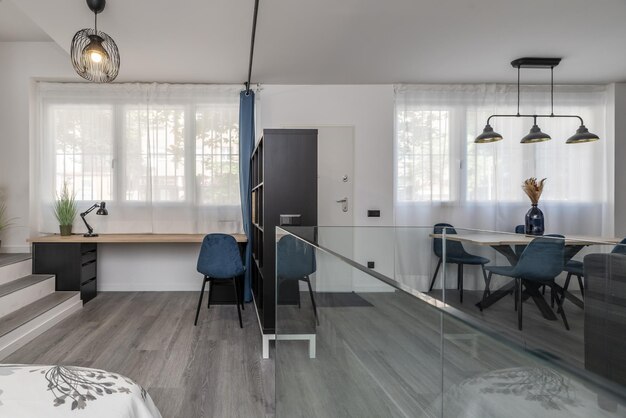
Smart Switchable Privacy Glass: A Modern Guide to Stylish Interiors and Smart Home Upgrades
Picture a bedroom wall that turns from crystal-clear window to soft, milky privacy screen with a tap on your phone. Or a home office where a glass partition goes opaque the moment you start a video call. Smart switchable privacy glass takes that from science fiction to everyday interior design.
This guide walks through what it is, how it works, where it fits best in your home, and what to consider if you’re thinking about using it as part of a modern interior or smart home setup.
What Is Smart Switchable Privacy Glass?
Smart switchable privacy glass (often called smart glass, switchable glass, or privacy glass) is a type of glass that can change from transparent to opaque and back again, usually with electricity.
Most residential systems use one of two main technologies:
PDLC (Polymer Dispersed Liquid Crystal) Film
This is currently the most common form for home interiors.
How it works:
- Tiny liquid crystal droplets are dispersed in a polymer layer between glass panes.
- When power is OFF: The crystals are scattered and misaligned, making the glass appear frosted or opaque.
- When power is ON: The crystals align, allowing light to pass through and making the glass clear or nearly clear.
Typical uses: Interior partitions, bathroom windows, shower enclosures, doors, and conference-style spaces in home offices.
SPD (Suspended Particle Device) Glass
Less common in homes, more often seen in specialty or premium installations.
How it works:
- Suspended microscopic particles within a film change alignment with electricity.
- As alignment changes, the glass transitions between darker and lighter tints.
Typical uses: Skylights, large exterior windows, and applications where light control and dimming are more important than full privacy frosting.
For most interior design and smart home upgrades, PDLC-based switchable glass is the primary option people explore.
Why Homeowners Are Turning to Smart Privacy Glass
People are drawn to smart privacy glass because it combines design flexibility, privacy on demand, and integration with smart home systems.
Here are some of the main motivations:
Open, airy layouts without sacrificing privacy
Glass walls and partitions let light travel, but fixed glass can feel too exposed. Switchable glass allows spaces to remain visually open when desired and private when needed.Space-saving alternative to blinds and curtains
Instead of hanging fabric or installing physical blinds, the glass itself becomes the privacy layer.Minimal, modern aesthetic
Many homeowners aiming for a contemporary look prefer clean lines and uncluttered window treatments.Smart home integration
Some systems can be tied into a wider smart home ecosystem, with control through apps, voice assistants, or programmed routines.Multi-functional rooms
A single space can quickly shift from open-plan to private: think guest bedroom/home office combos or open bathroom/bedroom suites.
Design Ideas: Where Smart Glass Works Best in the Home
Switchable privacy glass is most effective when it solves a specific design or privacy challenge. Below are popular, practical home applications.
1. Bathrooms and En-Suite Areas
Bathrooms are one of the most common places people use smart glass.
Use cases:
- Bathroom windows:
- Keep the window clear for daylight during the day, and switch it to privacy mode at night or when neighbors are nearby.
- Shower enclosures:
- A fully glass shower can turn opaque for privacy while in use, but remain clear the rest of the time for a more open-feeling bathroom.
- Glass walls between bedroom and bathroom:
- In many modern designs, en-suite bathrooms open directly to bedrooms. Smart glass allows the wall or door to switch from open view to privacy in seconds.
Design tip:
For bathrooms, the frosted/opaque mode becomes part of the decor. Many people choose matte finishes or soft lighting that complement the frosted look.
2. Home Offices and Study Spaces
As more people work from home, privacy for calls and focus has become a priority.
Use cases:
- Glass partitions in open-plan living areas:
- Create a home office “room” using glass walls that switch opaque during meetings.
- Office doors with smart glass panels:
- Keep the door glass clear to feel connected to the rest of the home, then turn it opaque when you need a concentration zone.
- Media or Zoom background control:
- Opaque glass can serve as a neutral, professional-looking backdrop.
Smart home angle:
Office glass can be linked to occupancy sensors or a “Do Not Disturb” scene on a smart home hub, so it automatically frosts when you start a call or activate a work mode.
3. Bedrooms and Closets
Bedrooms benefit from both natural light and flexible privacy.
Use cases:
- Interior bedroom windows or transoms:
- Glass panels above doors or between rooms let light travel inside apartments or small homes; switchable glass maintains privacy.
- Walk-in closet doors:
- Clear glass shows off clothing organization when you want it, then frosts for a tidier look.
- Guest rooms:
- Temporary guest spaces within studios or lofts can use smart partitions to provide visitors with privacy without permanent walls.
4. Living Rooms and Open-Plan Layouts
Many contemporary homes embrace open-plan layouts. Smart glass can subtly define zones without heavy walls.
Use cases:
- Room dividers:
- Divide a living room from a dining area with a smart glass partition that disappears visually when clear and forms a subtle screen when frosted.
- Media room or home theater:
- Use smart glass walls that switch opaque for movie time, reducing light spill and visual distraction.
- Balcony or patio doors:
- Maintain views when desired; enable privacy in the evenings when interior lights make rooms more visible from outside.
5. Kitchens and Dining Areas
Kitchens are increasingly social spaces. Smart glass can keep them feeling open while hiding clutter when needed.
Use cases:
- Pantry doors:
- Transparent when organized and curated, opaque when you want to conceal stored items.
- Glass cabinet fronts:
- Display dishware or ornamental pieces in clear mode; hide mismatched items or clutter in opaque mode.
- Kitchen–dining separation:
- Create a partial smart glass screen between cooking and eating areas that can either visually connect or divide as needed.
6. Entrances and Hallways
Entryways often balance curb appeal, light, and privacy from the street.
Use cases:
- Front doors with glass panels:
- Allow daylight to brighten the foyer but switch opaque for privacy at night.
- Side lights (narrow windows beside doors):
- Keep them clear for a welcoming look and visibility, then frost on a schedule or at the touch of a button.
- Interior hallway panels:
- Use smart glass instead of solid walls to brighten narrow hallways, especially in homes with limited natural light.
How Smart Switchable Glass Works in Daily Life
Understanding day-to-day use helps determine whether smart glass fits your lifestyle.
Controlling Transparency
Common control methods include:
- Wall switches or dimmers
- Handheld remote controls
- Smartphone apps (depending on the system)
- Smart home platforms for integrated control
- Voice control (where compatible with voice assistants)
Homeowners often set up scenes such as:
- “Morning”: bedroom window glass clear, bathroom glass opaque.
- “Movie Night”: living room partition opaque, exterior windows tinted or shaded.
- “Away”: certain windows opaque for privacy.
Power Considerations
- Most PDLC smart glass requires electricity to stay clear and defaults to opaque when powered off.
- Some people like this default because it provides privacy during outages.
- Wiring is typically discreet, hidden in frames or architectural details, but planning early in a renovation or new build makes this much easier.
Cleaning and Maintenance
- The glass surfaces are usually cleaned similarly to standard glass, using non-abrasive cleaners and soft cloths.
- The edges and electrical connectors need more care to avoid moisture or physical damage.
- Over time, some installations may show slight changes in clarity or uniformity, especially if exposed to harsh conditions or frequent mechanical stress, so placement and care matter.
Smart Home Integration: Bringing It into Your Connected Home
For many homeowners, the appeal of smart glass grows when it becomes part of a larger smart ecosystem.
Common Integration Options
Depending on system compatibility, smart privacy glass can often be:
- Paired with smart switches or smart relays.
- Connected to hubs or controllers used for lights, thermostats, and blinds.
- Automated with IF–THEN routines, such as:
- “If time is after sunset, set street-facing glass to opaque.”
- “When the home theater scene is activated, dim lights and frost the media room glass.”
Example Automation Scenarios
Bathroom privacy routine:
- When the bathroom occupancy sensor is triggered, switch glass to opaque. After the room has been empty for a while, switch to clear.
Work-from-home routine:
- Activating a “Work Mode” scene might:
- Turn office smart glass opaque.
- Adjust lighting to a brighter, cooler tone.
- Silence doorbell chimes or send them to a phone instead.
- Activating a “Work Mode” scene might:
Security and privacy:
- Some homeowners integrate smart glass with alarm modes, so windows or interior partitions switch to privacy when the system is armed at night.
Connectivity Considerations
- Systems may operate through low-voltage transformers, which can be connected to smart modules.
- It can be helpful to plan where you want control points (switches, panels, hubs) before glass installation, especially if walls will be opened or new wiring is needed.
Comparing Smart Privacy Glass to Traditional Options
When considering smart glass, it often helps to compare it with curtains, blinds, and etched glass.
| Feature 🧩 | Smart Privacy Glass | Curtains/Blinds | Frosted/Etched Static Glass |
|---|---|---|---|
| Privacy Control | On-demand, electronic | Manual or motorized | Always-on (no change) |
| Light Transmission | Clear or diffused | Varies by fabric/slat type | Diffused, remains consistent |
| Aesthetic | Minimal, modern, high-tech | Soft, decorative, varied styles | Clean, simple, matte |
| Space Usage | No extra physical space needed | Takes space, may interfere with openings | No extra space |
| Smart Home Integration | Often possible | Possible with motorized systems | Typically not integrated |
| Flexibility Over Time | Switchable between clear/opaque | Can be opened, closed, or replaced | Permanent appearance |
Many homeowners see smart glass as complementing, not completely replacing, other treatments. For example, some still use soft curtains for warmth and texture while relying on smart glass for core privacy control.
Key Practical Considerations Before You Install
Switchable glass is a specialized product, so planning ahead tends to result in better outcomes.
1. New Glass vs. Retrofit Film
There are two primary approaches:
Factory-laminated smart glass panels:
- Glass units manufactured with the smart interlayer included.
- Often used for new construction or major renovations.
- Typically integrated into standard glazing frames.
Retrofit smart film applied to existing glass:
- A film is added to current windows or partitions.
- Can be helpful for upgrades without full glass replacement.
- Requires careful installation to avoid bubbles or damage, and often needs professional expertise.
Each approach has its own visual characteristics. For visible edges or frameless designs, people often lean toward factory-laminated units for a more seamless look.
2. Electrical Planning and Safety
Because smart glass needs power:
- Consider where power supplies and transformers will be placed.
- Ensure any areas exposed to moisture (bathrooms, showers, exteriors) are installed with appropriate safety measures and according to relevant building regulations.
- Plan how wiring runs will be hidden—in frames, ceilings, or walls.
3. Room Function and Orientation
Not every window or partition is an ideal candidate.
- High-glare, south-facing windows:
- Switchable glass provides privacy but may not always replace dedicated shading or exterior solutions for intense sunlight.
- Bedrooms and bathrooms:
- Think about your daily routines. For example, do you want glass to default to privacy when you wake?
- Children’s rooms or high-traffic areas:
- Consider durability and how often glass might be touched, leaned on, or potentially impacted by toys or moving objects.
Visual Effects, Style, and Design Matching
Beyond practicality, smart glass is a design element on its own.
Appearance in Clear vs. Opaque Modes
- Clear mode:
- Usually resembles regular clear or slightly tinted glass.
- Some people notice a faint haze or subtle diffusion, depending on the product and lighting.
- Opaque mode:
- Often looks like a frosted glass panel.
- Provides visual privacy but still allows light to pass through, which helps maintain brightness.
Coordinating with Interior Design
Smart glass can be paired with:
- Black or dark metal frames for an industrial or modern look.
- Warm wood frames for a softer, Scandinavian-inspired style.
- Frameless systems for a minimal, gallery-like aesthetic.
Since the opaque mode is prominent, many designers treat it as a feature wall finish—combining it with indirect lighting, colored walls, or textured tiles nearby.
Everyday Pros and Trade-Offs
Smart switchable glass has distinctive advantages but also trade-offs to consider.
Potential Advantages
- Instant privacy without moving parts like blinds or curtains.
- Space-saving design, especially in tight layouts.
- Modern aesthetic that can align with high-end or contemporary interiors.
- Flexible room usage for multipurpose spaces.
- Integration potential with smart home systems and scenes.
Potential Trade-Offs
- Specialized installation:
- Often needs professional experience in both glazing and electrical work.
- Upfront cost:
- Generally higher than simple curtains or typical blinds.
- Dependence on power:
- For many systems, clear mode requires electricity; power loss typically means defaulting to privacy or a default setting.
- Visual characteristics:
- Some people may notice slight differences compared to regular glass, especially under certain lighting angles.
Homeowners typically weigh these factors based on lifestyle, aesthetic priorities, and whether they are already investing in a broader smart home or renovation project.
Quick-Glance Tips for Using Smart Privacy Glass at Home
Here is a condensed set of practical ideas to guide planning and design.
📝 Smart Glass Planning Checklist
- ✅ Identify key areas where privacy is needed but natural light is important (bathrooms, office, entrance, etc.).
- ✅ Decide between new glass units or retrofit film based on renovation scope.
- ✅ Plan wiring routes early to keep cables hidden and installations clean.
- ✅ Consider smart home scenes you might want, such as “Work,” “Night,” or “Movie.”
- ✅ Think about default states (clear or opaque) for power-off conditions in each room.
- ✅ Match frame styles and surrounding materials (metal, wood, tile) to your design theme.
- ✅ Account for cleaning access, especially for large panels or hard-to-reach glass.
- ✅ Discuss moisture and safety requirements for bathroom or shower installations.
Inspiration: Real-World Style Concepts
While specific projects vary, certain themes show up frequently in modern homes using smart glass.
Minimalist Urban Loft
- Open-plan living and bedroom separated by a full-height smart glass wall.
- Clear during the day for an airy, studio feel.
- Opaque at night to create a private sleeping space.
- Smart glass linked to dimmable lights and blackout shades on exterior windows.
Compact City Apartment
- Glass-enclosed home office nook within the living room.
- Office glass panel turns opaque when a “Call in Progress” scene is triggered.
- Bathroom window with smart glass ensures privacy in a tight urban context while still allowing daylight into the shower.
Modern Family Home
- Front entry door side lights with smart glass for flexible privacy.
- Kitchen pantry door with switchable frosting, staying clear for daily use but turning opaque when entertaining.
- Media room glass partition that frosts during movie time and clears for open play space otherwise.
These concepts highlight how smart glass can adapt homes to changing daily needs without requiring constant manual adjustments.
Getting the Most Out of Smart Glass in a Smart Home
For those already invested in home automation, switchable glass can become part of a coordinated environment rather than just a single feature.
Some practical integration ideas:
- Link smart glass to time-based routines (e.g., privacy at bedtime, clear in the morning).
- Pair glass states with lighting scenes and sound systems for a cohesive mood change.
- Use smart glass as a subtle status indicator—for instance, office glass turning opaque to signal that someone is on a call.
- Combine with contact or occupancy sensors to automate privacy in bathrooms or dressing areas.
Thoughtful integration helps the glass feel less like a novelty and more like a natural part of how the home functions.
Bringing It All Together
Smart switchable privacy glass sits at the intersection of interior design, technology, and everyday practicality. It enables homes to be bright and open when you want connection, and calmly private when you need retreat.
For homeowners planning a renovation or smart home upgrade, it can be most effective when:
- Used strategically in spaces where light and privacy both matter.
- Integrated with wiring and smart controls from the beginning of the design process.
- Treated as both a functional layer and a design element in its own right.
By thinking through where and how you want flexibility in your living spaces—whether it’s a bathroom that glows softly behind frosted glass, a home office that signals focus time, or a bedroom that shifts from open-plan luxury to quiet retreat—smart privacy glass can play a central role in creating a home that feels both modern and deeply livable.