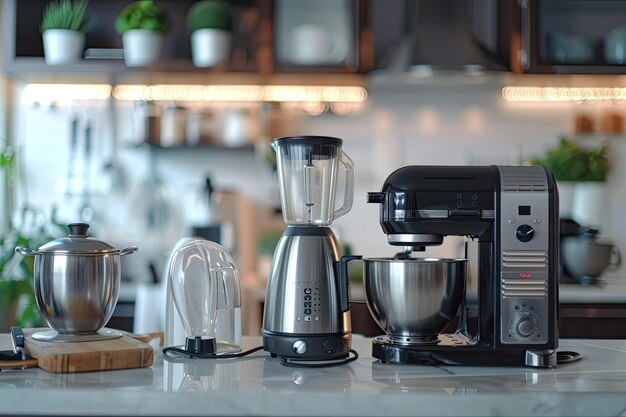
Choosing the Right Kitchen and Café Appliances for Home Cooking and Professional Use
Walk into any modern kitchen or café and you’ll see the same thing: counters packed with gadgets, gleaming espresso machines, and rows of specialized tools. Some of them get used daily. Others collect dust.
Knowing which appliances actually deserve a place in your space—and which are more hype than help—can save money, time, and frustration whether you’re cooking at home or running a small food business.
This guide walks through how to choose the best kitchen and café appliances by focusing on:
- What you really need based on how and where you cook
- Key features that matter (and which ones are just marketing)
- Differences between home and professional appliances
- How to balance budget, durability, and performance
Understanding Your Kitchen or Café Needs
Before comparing specific appliances, it helps to define what you’re actually buying them for.
Start With Your Space, Style, and Scale
Ask three core questions:
Where will the appliance be used?
- Home kitchen
- Small café, food truck, bakery, catering kitchen
- Shared or rented commercial kitchen
How many people are you serving regularly?
- Home: yourself, a couple, a family, or frequent large gatherings
- Café/restaurant: light traffic or high-volume service
What’s your cooking or drink style?
- Simple, everyday meals
- Scratch cooking and experimenting
- Specialty drinks and café-style beverages
- High-volume, consistent output (for customers)
Your answers shape almost every decision—size, power, durability, and cost.
Home vs. Professional: What’s the Real Difference?
The line between home and commercial equipment is blurry. Many modern home appliances borrow features from professional gear, and many small cafés use “prosumer” (professional-consumer hybrid) machines.
In general:
Home appliances
- Designed for moderate, intermittent use
- Emphasize appearance, compact size, and ease of use
- Often quieter and more energy efficient
- Lower upfront cost, but may wear faster under heavy use
Professional appliances
- Built for continuous, high-volume use
- Focus on durability, speed, and consistency
- May be noisier, larger, and require dedicated power or water lines
- Higher upfront cost, but often longer-lasting under heavy use
For many people, the sweet spot is prosumer-grade appliances: robust enough for frequent cooking or small business needs, but still manageable in home or small café environments.
Core Cooking Appliances: Ranges, Ovens, and Hobs
These are the backbone of any kitchen, home or commercial.
Choosing a Range or Cooktop
Key decision: gas, electric, or induction.
Gas
- Visible flame and instant heat adjustment
- Popular with many professional cooks for responsiveness
- Requires gas line and proper ventilation
Electric (coil or radiant glass-ceramic)
- Easier installation in many homes
- Smooth tops are simple to wipe down
- Slower to heat and cool than gas or induction
Induction
- Very fast heating, precise temperature control
- Surface stays cooler (heat transfers to the pan itself)
- Requires compatible cookware (magnetic base)
- Common in modern professional and home kitchens seeking efficiency
For home cooking:
- Consider your existing power and gas connections.
- Induction is popular for people who want speed, precision, and easy cleaning.
- Standard electric or gas ranges are often sufficient for most home cooks.
For professional or café use:
- Look for heavy-duty burners, high power output, and durable grates or surfaces.
- Induction units are often used in commercial kitchens where speed and temperature stability are crucial and where reducing kitchen heat is a priority.
Ovens: Capacity, Functions, and Types
Common categories:
- Conventional ovens: Heat from top/bottom elements; basic baking and roasting.
- Convection ovens: Include fans to circulate hot air for more even browning and faster cooking.
- Combination or “combi” ovens: Use steam and dry heat, allowing very precise control for baking, roasting, and reheating. Common in professional kitchens.
- Wall ovens vs. range ovens: Wall ovens help separate cooking zones and can be easier to access.
Features to consider:
Capacity:
- Home: Will it fit your largest baking trays or roasting pans?
- Professional: Can it handle multiple trays at once during peak times?
Controls and precision:
- Simple dial controls are reliable and easy to use.
- Digital controls can offer precise temperatures and preset programs.
Self-cleaning options:
- Pyrolytic (high-heat) cleaning is convenient but intense on surfaces and energy.
- Steam-clean functions can help with lighter cleaning tasks.
For baking-heavy cafés or bakeries, convection or combi ovens often provide more consistent results and efficiency than basic models.
Refrigeration and Cold Storage
Keeping ingredients fresh and safe is central to both home and professional cooking.
Fridges and Freezers: What Matters Most
Key factors:
Capacity vs. space
- Measure your space (height, width, depth) and consider door swing.
- Cafés often need upright, reach-in refrigerators with clear interior layouts for quick access.
Configuration
- Top-freezer, bottom-freezer, side-by-side, or French door (for homes).
- Single-door, double-door, or glass-door units (for professional).
- Undercounter fridges can save space in cafés.
Temperature stability
- Professional units tend to maintain temperatures more steadily under frequent door opening.
- In busy cafés, stable temperature matters greatly for food safety and quality.
Noise and energy use
- For homes and open café layouts, quieter and more efficient models can improve comfort and running costs.
Specialty Refrigeration for Café Use
Cafés and beverage-focused setups may also use:
- Display fridges for cakes, pastries, bottled drinks.
- Undercounter units near prep or bar areas.
- Dedicated milk fridges for espresso stations (or at least a fridge compartment close by).
Think about workflow: where ingredients live, how frequently they are accessed, and how quickly staff can move between fridge, prep, and service.
Small Appliances for Home and Café Kitchens
These tools often make the difference between struggling through prep and enjoying it.
Blenders and Food Processors
These two are often confused but serve different roles.
Blenders
- Best for liquids: smoothies, soups, sauces, milkshakes.
- High-powered models can handle ice, frozen fruit, and nuts more consistently.
Food processors
- Best for chopping, slicing, grating, mixing doughs, and making spreads.
- Various attachments handle different prep tasks quickly.
For home use:
- A mid-range blender and basic food processor often cover most needs.
- Multi-function units (with blender and processor attachments) can save space.
For cafés:
- High-powered, durable blenders are often used repeatedly for smoothies, frozen drinks, and sauces.
- Sharp, easily replaceable blades and sturdy containers are valuable for high-volume use.
Stand Mixers and Hand Mixers
Stand mixers
- Great for frequent baking, bread dough, batters, and whipped items.
- Attachments can handle pasta, grinding, or spiralizing.
- Heavier and take counter or storage space, but offer hands-free operation.
Hand mixers
- Compact and good for occasional baking or small batches.
- Less powerful, but easy to store and clean.
In professional settings, heavy-duty stand mixers and sometimes floor-standing mixers are common for large batches.
Café Appliances: Espresso Machines, Grinders, and Brewing Gear
For anyone aiming to serve café-quality drinks—at home or commercially—beverage equipment deserves special attention.
Espresso Machines: What to Look For
Key distinctions:
Manual/semi-automatic
- User controls timing and often pressure; more skill-based.
- Popular in specialty coffee environments and by enthusiasts.
Automatic/super-automatic
- Machine handles grinding, dosing, and extraction with minimal input.
- Good for high-volume or environments with rotating staff.
Features to consider:
Boiler system
- Single boiler machines alternate between brewing and steaming.
- Dual boiler or heat-exchanger machines can brew espresso and steam milk simultaneously—helpful in cafés or for frequent milk drinks.
Temperature and pressure stability
- Consistent temperature helps with repeatable espresso shots.
- Pressure control can influence flavor, especially in specialty coffee preparation.
Capacity
- Home setups likely need one group head and a small reservoir.
- Professional environments may need multiple group heads and direct plumbing.
For home baristas, compact machines with enough steam power for a few drinks at a time can be sufficient.
For cafés, durability, recover time between shots, and steam capacity are often more decisive than aesthetics.
Coffee Grinders: As Important as the Machine
Many coffee-focused users find that grind quality has at least as much impact on flavor as the espresso machine itself.
Consider:
Burr vs. blade
- Burr grinders are generally preferred for consistency.
- Blade grinders chop unevenly and are more suited for casual use.
Adjustment control
- Espresso requires fine, precise adjustments.
- Filter coffee and pour-over benefit from consistency at medium grind sizes.
Retention and cleaning
- Low-retention designs waste less coffee and make switching beans easier.
- Easy-to-disassemble parts simplify maintenance, especially in cafés.
In a café, having separate grinders for espresso and filter coffee is common.
Other Café Essentials
Depending on your menu and scale, consider:
- Drip coffee makers or batch brewers
- Pour-over kettles with precise spouts and temperature control
- Milk frothers or steam wands (for non-espresso setups)
- Ice makers for iced drinks and cold brew service
For both home and professional spaces, it’s helpful to design a coffee and beverage zone to keep everything in one efficient area.
Matching Appliances to Your Cooking and Service Style
Rather than buying everything at once, many people find it helpful to focus on core tasks they do most often.
For Everyday Home Cooks
Appliances that frequently see use in many homes include:
- A reliable stove and oven (or range)
- A good fridge/freezer
- A microwave for reheating and quick tasks
- A blender or food processor
- A kettle (electric or stovetop)
If you enjoy baking, a stand mixer might be worth the space. If you love coffee, upgrading from a basic drip machine to a more capable brewer or espresso setup can make a noticeable difference in daily routine.
For Home Cooks Who Host Often
If you regularly cook for larger groups:
- Larger oven capacity and multiple racks can help.
- A warming drawer or slow cooker can keep dishes at serving temperature.
- Extra fridge space or a secondary fridge can reduce crowding.
- A dishwasher with flexible racks saves time on cleanup.
For Small Cafés, Food Trucks, and Micro-Bakeries
In professional or semi-professional spaces, workflow matters as much as the individual appliance.
Consider:
Speed and output:
- Can the equipment keep up during peak service without slowing down staff?
Layout and accessibility:
- Are fridges, prep counters, cooking stations, and coffee gear logically arranged?
Cleaning and maintenance:
- Can machines be cleaned quickly at closing time?
- Are there easily accessible filters, gaskets, and parts?
Many small operations start with a core set of durable appliances and then add specialty items (like a panini press or extra refrigeration) once the main workflow is running smoothly.
Key Features to Evaluate Before You Buy
Different appliances share some universal decision points.
1. Build Quality and Durability
Indicators that often signal better durability:
- Use of metal components instead of exclusively plastic parts in high-stress areas
- Sturdy hinges and handles on doors
- Solid-feeling controls and knobs
For professional use, appliances are typically rated or designed for continuous or high-frequency use. In home settings, this may not be necessary, but it can still extend lifespan for frequent users.
2. Size, Capacity, and Layout
⚖️ Balance what you need with what you can fit.
- Measure both the space (including ventilation clearances) and the doorways or stairs the appliance must pass through.
- Make sure you can open doors fully without blocking traffic paths.
- For fridges, interior layout affects how easily you can organize ingredients and reduce waste.
3. Power, Connections, and Ventilation
- Check electrical requirements: some larger or professional appliances need dedicated circuits or higher voltage.
- Gas appliances require safe connections and proper ventilation.
- Hoods and exhaust systems help manage heat, steam, and smoke in both homes and cafés.
4. Energy Efficiency
Efficiency can affect:
- Monthly utility bills
- Overall environmental impact
- Ambient temperature in your kitchen or café
In some regions, appliances may have standardized efficiency labels. While specific ratings vary, focusing on insulation quality, compressor efficiency, and modern motor designs can often provide long-term savings.
5. Ease of Cleaning
Over time, ease of cleaning can matter more than any flashy feature.
Helpful design elements:
- Smooth, accessible surfaces with minimal crevices
- Removable trays, shelves, and drip pans
- Dishwasher-safe components for smaller parts
- Clear instructions for de-scaling or backflushing (for espresso machines and similar items)
6. Controls and User Interface
- Analog controls (dials, toggle switches) are generally robust and easy to understand.
- Digital controls can offer precise programming, timers, and presets but may be more complex or sensitive.
In a café or shared kitchen, intuitive interfaces reduce training time and user errors.
Planning a Balanced Appliance Budget
Spending more does not always guarantee better results, but certain areas usually benefit from higher investment.
Where Higher Investment Often Matters
- Core cooking appliances (range, oven, fridge/freezer)
- High-use café gear (espresso machines, grinders, commercial blenders)
- Heavy-duty mixers or processors for baking and prep-heavy operations
For these, durability, repairability, and performance can affect daily operations and food quality.
Where You Might Save
- Specialty gadgets that only perform one narrow task
- Highly decorative finishes that do not add functional value
- Duplicate items that overlap in function with tools you already own
It can help to think in tiers:
| Appliance Category | Home: Typical Priority | Café/Pro: Typical Priority |
|---|---|---|
| Range / Oven | High | High |
| Fridge / Freezer | High | High |
| Coffee / Espresso Gear | Medium–High | High |
| Blender / Processor | Medium | High |
| Stand Mixer | Medium–High (if baking) | High (if baking-focused) |
| Specialty Gadgets | Low | Medium (if menu-specific) |
Safety, Regulations, and Practical Considerations
Safety for Home Use
Basic precautions include:
- Avoid overloading electrical circuits with multiple high-wattage appliances.
- Position appliances to prevent cords from crossing walkways or hot surfaces.
- Keep flammable items away from heat sources.
- Use proper cookware for induction and avoid using damaged pans on any heat source.
Safety and Compliance for Professional Use
Cafés and commercial kitchens typically must adhere to:
- Local building and fire codes for ventilation and power
- Health department guidelines for refrigeration, food storage, and sanitation
- Requirements for commercial-rated appliances in certain categories
Before purchasing large items for a business, it’s helpful to confirm that:
- The equipment meets any required safety or sanitation standards.
- The space’s electrical and plumbing systems can support the load.
- Service and parts are realistically accessible in your area.
Quick-Reference Checklist 🧾
Use this as a fast way to narrow down options when choosing any major kitchen or café appliance.
Before you shop:
- ✅ Define primary use (home daily cooking, hosting, café service, baking, beverages)
- ✅ Measure available space, including doorways and clearances
- ✅ Note your power, gas, and water connections
- ✅ Decide how many people you’re regularly serving
When evaluating an appliance:
- 🔍 Check capacity: Does it match your typical batch size?
- ⚙️ Examine build quality: Are critical parts sturdy and well-finished?
- 🧼 Assess ease of cleaning: Are surfaces and parts accessible?
- 🔌 Confirm compatibility with your existing power/gas setup
- 🔊 Consider noise level if it’s in living or customer areas
- 💧 Look for features that support food quality and safety (temperature stability, reliable controls)
Thinking long term:
- ♻️ Consider energy use and running costs
- 🛠️ Check the availability of replacement parts and routine service
- 🕒 Ask yourself how often you’ll realistically use it
Bringing It All Together
Choosing the best kitchen and café appliances is less about chasing the latest trend and more about aligning tools with the way you actually cook and serve.
When you:
- Start with your space, habits, and goals
- Prioritize core, high-impact appliances
- Focus on durability, ease of use, and cleaning
- Consider both upfront and long-term costs
…you end up with a kitchen or café that supports you, instead of one that overwhelms you with unused gadgets and constant maintenance.
Whether you’re simmering soups at home, baking for a weekend market, or pulling espresso shots in a busy café, thoughtfully chosen appliances can make your work smoother, your space more efficient, and your time in the kitchen more enjoyable.