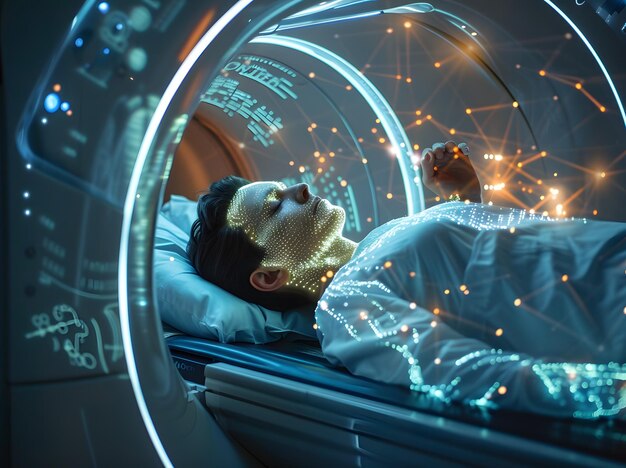
Radiology and Medical Imaging Explained: Your Practical Guide to MRI, Ultrasound, and Diagnostic Scans
Modern healthcare relies heavily on images. Before many conditions are treated, they are seen—in slices, in motion, and in remarkable detail. If you have ever been sent for an MRI, ultrasound, or other scan, you may have left with more questions than answers. What exactly do these tests show? How do they differ? And what should you expect on the day of your exam?
This guide breaks down radiology and medical imaging in clear, approachable language, with a special focus on MRI, ultrasound, and common diagnostic services. The goal is to help you understand what these tests do, how they are used, and what typically happens during the process—without offering medical advice or trying to steer you toward specific treatments.
What Is Radiology and Why Does It Matter?
Radiology is the branch of medicine that uses imaging technologies to:
- Look inside the body without surgery
- Help detect, confirm, or monitor medical conditions
- Guide certain procedures, such as biopsies or minimally invasive treatments
Radiology covers a wide range of tests, including:
- X‑rays
- Computed tomography (CT)
- Magnetic resonance imaging (MRI)
- Ultrasound
- Nuclear medicine scans
- Mammography
- Fluoroscopy (live X‑ray imaging)
Specially trained doctors called radiologists interpret these images and share their findings with the rest of the healthcare team. Technologists or sonographers operate the machines and help patients through the exam.
Imaging does not diagnose on its own; rather, it provides information that is combined with symptoms, history, and other tests.
The Main Types of Medical Imaging at a Glance
Before diving into MRI and ultrasound, it helps to understand where they sit among other imaging tools.
| Imaging Type | Uses | Involves Radiation? | Typical Strengths |
|---|---|---|---|
| X‑ray | Bones, lungs, some chest/abdominal issues | Yes | Quick, widely available, first-line for many injuries |
| CT scan | Detailed cross-sectional images of many body areas | Yes | Fast, detailed anatomy, useful in emergencies |
| MRI | Brain, spine, joints, soft tissues, some organs | No | High soft‑tissue detail, multiple image types |
| Ultrasound | Pregnancy, organs, blood flow, soft tissues | No | Real-time imaging, portable, no ionizing radiation |
| Mammography | Breast tissue | Yes | Screening and evaluation of breast changes |
| Nuclear medicine | Organ function (heart, bones, thyroid, etc.) | Yes (small, targeted) | Shows how organs and tissues are working |
Each test has trade‑offs: some show excellent detail but take longer; others are quick but show less soft‑tissue contrast. Which one is used in a given situation is usually guided by established imaging practices and the specific question the healthcare team needs to answer.
MRI: Magnetic Resonance Imaging in Plain Language
How MRI Works
Magnetic resonance imaging (MRI) uses:
- A strong magnetic field
- Radio waves
- A computer to build highly detailed images
There is no ionizing radiation (unlike X‑rays and CT scans). MRI is especially useful for soft tissues: brain, spinal cord, muscles, ligaments, cartilage, some organs, and even certain blood vessels.
Inside the MRI machine, your body’s atoms respond to the magnetic field and radio waves. The scanner detects these signals and converts them into pictures. Different settings highlight different tissue types, so radiologists can see structures and abnormalities in multiple ways.
Common Reasons MRI Is Ordered
MRI is widely used across many areas of medicine. Common uses include:
- Brain and spine
- Headaches, seizures, strokes, multiple sclerosis, injuries, disc problems
- Joints and bones
- Knee, shoulder, hip, and spine pain, ligament tears, cartilage or tendon injuries
- Abdominal and pelvic organs
- Liver, pancreas, uterus, ovaries, prostate, and other soft tissues
- Heart and blood vessels (cardiac and vascular MRI)
- Heart structure and function, certain vessel conditions
- Whole‑body or targeted scans
- Evaluation or monitoring of some tumors or inflammatory conditions
In many situations, MRI is chosen when detailed soft‑tissue contrast is crucial, or when avoiding ionizing radiation is a priority.
What to Expect During an MRI Scan
Every imaging center has its own process, but MRI visits often follow a similar pattern:
Check‑in and screening
- You’ll usually complete a safety questionnaire about implants, surgeries, and metal exposure.
- Staff may ask about pacemakers, metal clips, implants, or foreign bodies in the eyes.
Changing clothes and removing metal
- You may be asked to wear a gown.
- Items like jewelry, watches, hearing aids, piercings, hairpins, and some cosmetics with metallic content need to be removed.
Positioning on the MRI table
- You lie on a padded table that slides into the scanner.
- A specialized device called a coil may be placed over the area being imaged (for example, a head coil for brain MRI, or a knee coil).
During the scan
- The machine is loud—you’ll hear rhythmic tapping, thumping, or buzzing. Ear protection or music is often provided.
- It’s important to stay as still as possible to avoid blurry images.
- The technologist can see and hear you and usually provides a call button if you need to communicate.
If contrast is used
- Some MRIs involve a contrast agent, usually given through an IV.
- Contrast helps highlight certain tissues, blood vessels, or areas of abnormality.
After the scan
- Most people can resume regular activities right away.
- Images are reviewed by a radiologist, who sends a report to the ordering clinician.
Who Might Not Be Able to Have an MRI?
Because MRI uses strong magnets, it is not suitable for everyone. People are often evaluated carefully if they have:
- Certain pacemakers or defibrillators
- Some metallic implants, such as older aneurysm clips, certain cochlear implants, or some neurostimulators
- Metal fragments in sensitive areas, especially the eyes
- Certain implanted drug pumps or older devices
Many newer devices are designed to be “MRI‑conditional” (compatible under specific conditions), but safety is assessed on a case‑by‑case basis. Screening is critical and is handled by the imaging team.
Managing Common Concerns About MRI
Many individuals have questions or worries about MRI. These points often come up:
- Noise: Ear protection and sometimes music are offered.
- Closed space: Some people feel uneasy in confined spaces. Communication with staff, relaxation techniques, or, in some settings, mild sedation may be options discussed with the healthcare team in advance.
- Length of exam: MRI scans are usually longer than X‑ray or CT, often ranging from under 30 minutes to close to an hour, depending on the exam.
None of these concerns are unusual, and imaging staff are used to helping people through them.
Ultrasound: Real-Time Imaging With Sound Waves
How Ultrasound Works
Ultrasound imaging (also called sonography) uses high‑frequency sound waves, not radiation. A handheld device called a transducer sends sound waves into the body and listens for echoes. A computer converts these echoes into moving images.
Because it is real‑time, ultrasound is especially good for seeing:
- Moving structures (like a beating heart)
- Blood flow in vessels
- Fetal movement during pregnancy
Common Uses of Ultrasound
Ultrasound is used in many different situations, including:
Pregnancy care
- Assessing fetal growth and position
- Estimating due dates
- Checking the placenta and amniotic fluid
Abdominal imaging
- Liver, gallbladder, bile ducts, pancreas, spleen, kidneys, and bladder
Pelvic imaging
- Uterus, ovaries, and other pelvic structures
Cardiac ultrasound (echocardiography)
- Heart structure and pumping function
- Valve movement and blood flow patterns
Vascular ultrasound
- Blood flow in arteries and veins
- Screening or evaluation of vein clots or vessel narrowing
Soft tissue and musculoskeletal ultrasound
- Thyroid, testicles, muscles, tendons, and superficial lumps or bumps
In many cases, ultrasound is chosen because it is:
- Widely available
- Portable (can be used at the bedside in various settings)
- Free of ionizing radiation
What to Expect During an Ultrasound Exam
Ultrasound exams are usually straightforward:
Preparation
- Instructions depend on the exam. Some abdominal scans may require fasting; pelvic exams may require a full bladder.
- Clothing adjustments or a gown may be needed to expose the area.
Gel application
- The sonographer applies a water‑based gel to the skin.
- The gel helps the sound waves travel and improves image quality.
Imaging
- The transducer is moved over the skin with gentle pressure.
- The sonographer may ask you to hold your breath, change position, or roll to one side to improve views.
Duration
- Many exams are completed within about 20–45 minutes, though times vary.
After the exam
- The gel is wiped off and you can usually return to normal activities right away.
- A radiologist or specialist reviews the images and provides a report.
Ultrasound is often associated with pregnancy, but its role extends far beyond that. It is commonly used as a first‑line imaging tool for many organs and soft tissues.
MRI vs. Ultrasound vs. Other Diagnostic Imaging
Different imaging tests answer different questions. Here is a simplified overview of how they compare in practice.
Key Differences in Everyday Terms
| Feature | MRI | Ultrasound | X‑ray / CT |
|---|---|---|---|
| Technology | Magnet + radio waves | Sound waves | Ionizing radiation |
| Soft tissue detail | Very high | Moderate to good | Moderate (CT generally higher than X‑ray) |
| Real-time imaging | Limited | Yes | Limited (except fluoroscopy) |
| Typical exam time | Longer | Shorter | Often shorter, especially X‑ray |
| Environment | Enclosed scanner, loud | Open, handheld device | Varies (open X‑ray room, CT gantry) |
| Common uses | Brain, spine, joints, soft tissues | Pregnancy, heart, organs, vessels | Bones, lungs, trauma, many acute conditions |
Each modality has advantages and limitations. For example:
- MRI excels at fine soft‑tissue detail but is more time‑intensive and less available in some settings.
- Ultrasound is flexible and radiation‑free but may not visualize deep or gas‑filled areas as clearly.
- X‑ray and CT are fast and widely used in emergencies, but they involve ionizing radiation.
The choice of imaging test is usually guided by what needs to be answered and which modality offers the clearest and most appropriate view with the least downside.
A Closer Look at Common Diagnostic Radiology Services
Beyond MRI and ultrasound, radiology includes many other routine imaging services. Understanding them can make orders on your chart or visit summaries easier to interpret.
X‑rays
X‑rays are one of the oldest and most common imaging tools. They are often used for:
- Suspected bone fractures or dislocations
- Chest imaging, such as checking for pneumonia or certain lung or heart changes
- Some abdominal concerns, like detecting air in places it should not be
They are usually quick and widely available. While they do involve radiation, the dose per exam is typically kept as low as reasonably achievable.
CT Scans
A computed tomography (CT) scan uses rotating X‑rays and computer processing to create cross‑sectional images of the body.
Common uses include:
- Emergency evaluation of head injuries, strokes, or sudden severe pain
- Detailed imaging of lungs, abdomen, pelvis, or bones
- Assessment of certain cancers, infections, or vascular problems
CT scans are generally faster than MRI and are frequently used in urgent situations. They do, however, use higher doses of ionizing radiation compared with plain X‑rays.
Mammography
Mammography is a specialized X‑ray exam of the breasts. It is commonly used for:
- Screening for early breast changes
- Evaluating new findings, such as lumps
Mammography is often combined with other imaging (like ultrasound) when more detail is needed in certain areas.
Fluoroscopy
Fluoroscopy is like a continuous X‑ray “movie.” It is used when live imaging is needed, such as:
- Swallowing studies with contrast
- Certain joint or spine injections
- Catheter placements or minimally invasive procedures
Nuclear Medicine
In nuclear medicine, small amounts of radiotracers are introduced into the body, and a special camera detects the radiation they emit. This provides information about:
- Organ function (for example, blood flow to the heart)
- Bone metabolism
- Some types of tumors or inflammation
Nuclear medicine images often show how well organs are working, rather than just what they look like.
Understanding Radiology Reports
After an imaging test, a radiology report is created. While it is written for healthcare professionals, some people view it later through patient portals and may want help making sense of it.
Most reports include:
- Clinical information: Why the exam was done
- Technique: Type of imaging, contrast used, body area examined
- Findings: Descriptions of what was seen
- Impression: A summary of the most important points
Some general points about reports:
- Language often sounds technical and cautious. Radiologists describe what they see and how confident they are, sometimes suggesting possibilities or follow‑up imaging.
- A finding that “cannot be excluded” or “may represent” something is not necessarily a diagnosis; it is a way of expressing degrees of certainty.
- Reports often mention incidental findings—unrelated observations that may or may not be significant.
📌 Helpful reminder:
Only a clinician who knows the full context—your history, symptoms, exam findings, and other tests—can explain the significance of a radiology report in a meaningful way.
Practical Tips for Patients Preparing for Imaging
While instructions vary, some general preparation steps can make imaging visits smoother.
Before the Appointment
- Confirm instructions
- Check if fasting, a full bladder, or medication adjustments are needed.
- Share your history
- Let the imaging center know about implants, devices, prior surgeries, or metal exposure.
- Bring relevant information
- List of medications
- Prior imaging reports or discs, if requested
On the Day of the Exam
- Arrive a bit early
- There may be forms, safety screening, or pre‑exam questions.
- Wear comfortable clothing
- Choose outfits without metal zippers or snaps when possible, especially for MRI.
- Prepare for waiting time
- Imaging centers may serve many patients; bringing reading material or something calming can help pass the time.
After the Exam
- Ask about timing
- You can ask the staff how results are typically communicated and to whom they will be sent.
- Keep your own notes
- Writing down exam names and dates can be useful for future reference, especially if you see multiple clinicians.
Quick-Reference Summary: Choosing Between MRI, Ultrasound, and Other Scans
Here is a compact overview to help orient you when seeing different imaging terms in your health records or visit summaries:
✅ When MRI is commonly used
- Detailed look at the brain or spinal cord
- Joint, ligament, or tendon injuries
- Some abdominal and pelvic soft‑tissue evaluations
- Situations where avoiding ionizing radiation is a priority and MRI is appropriate
✅ When ultrasound is commonly used
- Pregnancy care and fetal assessment
- Evaluation of abdominal organs (like the gallbladder, liver, or kidneys)
- Pelvic imaging for uterus and ovaries
- Heart (echocardiography) and blood vessel imaging
- Superficial soft tissue lumps, some muscles and tendons
✅ When X‑ray or CT is commonly used
- Bone injuries
- Chest evaluation (lungs, heart size)
- Sudden, severe head, chest, or abdominal pain
- Fast assessment in emergency settings
Key Takeaways for Navigating Radiology and Imaging 🧩
Here is a concise, skimmable summary of the most practical points:
🧠 Radiology is about information, not instant answers.
Imaging provides visual data that clinicians combine with symptoms, exams, and lab tests.🧲 MRI uses magnets and radio waves, not ionizing radiation.
It often offers excellent soft‑tissue detail but can be noisy, longer, and not suitable for everyone with implants.🔊 Ultrasound uses sound waves in real time.
It is commonly used in pregnancy and for organs and blood vessels, with no ionizing radiation involved.☢️ X‑ray and CT use ionizing radiation.
They are often the fastest ways to evaluate bones, lungs, and many acute conditions, especially in emergencies.📋 Radiology reports are technical by design.
They describe what is seen and how certain those observations are; your clinician helps interpret what it means for you.⚙️ Preparation and communication matter.
Sharing accurate information about implants, medications, and prior imaging helps staff choose safe, appropriate exam settings.🧾 Keep track of your imaging history.
Noting exam types, dates, and locations can simplify future care, especially if multiple clinicians are involved.
Bringing It All Together
Radiology and medical imaging sit quietly behind many important healthcare decisions. Whether it is an MRI of a sore knee, an ultrasound during pregnancy, or a CT scan in an emergency, these tests help clinicians see what cannot be seen from the outside.
Understanding the basics—how MRI and ultrasound work, what different scans are used for, and what to expect before, during, and after an exam—can make the process feel less mysterious and more manageable. It does not replace medical guidance, but it can help you follow conversations, ask informed questions, and feel more at ease when imaging becomes part of your care journey.
Imaging is ultimately a tool: powerful, evolving, and most effective when used thoughtfully. Knowing how it fits into modern healthcare gives you a clearer view not just of your body, but of the system working to understand it.