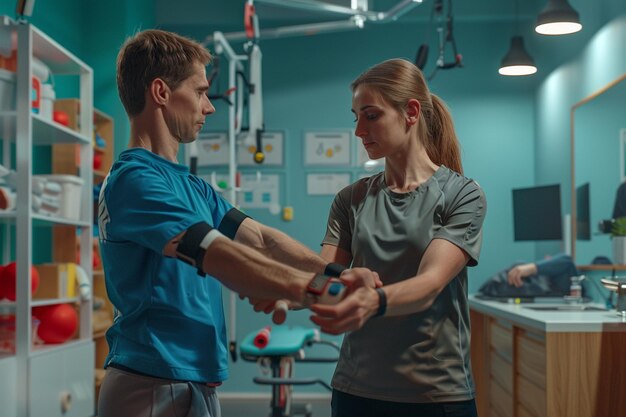
How Rehabilitation Research and Clinical Trials Are Transforming Patient Care and Therapy Outcomes
When someone experiences a stroke, spinal cord injury, surgery, or a chronic condition, rehabilitation often becomes the bridge between illness and everyday life. Behind the scenes of every therapy session, exercise plan, or assistive device, there is a growing body of rehabilitation research and clinical trials carefully shaping what happens in the clinic.
This field is changing quickly. New technologies, more inclusive research, and better ways of measuring progress are reshaping how rehabilitation teams help people regain movement, independence, and quality of life.
This guide explores how rehabilitation research and clinical trials are improving patient care and therapy outcomes—and what that means for patients, families, and healthcare professionals.
What Makes Rehabilitation Different from Other Areas of Healthcare?
Rehabilitation is not just about curing disease; it is about restoring function, adapting to limitations, and supporting participation in daily life.
Where traditional medical care often focuses on diagnosis and treatment of disease, rehabilitation care focuses on questions like:
- How can someone safely return to walking, working, or self-care?
- What adaptations make everyday tasks possible again?
- Which exercises or technologies help the nervous system relearn movement or speech?
Because of this focus, rehabilitation research tends to explore:
- How the brain and body recover after injury
- How to design effective therapy programs
- How to use technology (like robotics or virtual reality) to support recovery
- How to reduce disability and support independence over time
Clinical trials in rehabilitation follow structured methods similar to those in drug research, but they often test therapy approaches, devices, and care models rather than medications.
What Is Rehabilitation Research?
Rehabilitation research is a broad field that studies how to prevent, reduce, or adapt to disability. It typically focuses on four key questions:
What helps people recover function?
For example, whether intensive walking training or balance exercises lead to better mobility after a stroke.What is the safest and most efficient way to deliver therapy?
Such as comparing in-person sessions with tele-rehabilitation or group programs.Which assistive technologies are most useful?
Including wheelchairs, exoskeletons, communication devices, and home adaptations.How do rehabilitation services fit into the wider healthcare system?
Looking at transitions from hospital to home, or how community programs support long-term recovery.
Major Areas of Rehabilitation Research
Rehabilitation touches many conditions. Common focus areas include:
Neurological rehabilitation
Stroke, spinal cord injury, traumatic brain injury, multiple sclerosis, Parkinson’s disease, and other neurological conditions.Musculoskeletal and orthopedic rehabilitation
Joint replacements, fractures, chronic back pain, sports injuries, and arthritis.Cardiac and pulmonary rehabilitation
Recovery after heart surgery, heart failure, chronic lung disease, and other conditions that affect endurance.Pediatric rehabilitation
Developmental conditions such as cerebral palsy, genetic conditions, or injuries affecting children.Geriatric rehabilitation
Falls, balance problems, frailty, and functional decline in older adults.
Across these areas, research and clinical trials aim to answer a core question:
What actually works best to help people function better in daily life?
What Are Clinical Trials in Rehabilitation?
Clinical trials in rehabilitation are structured studies that compare different therapy approaches, technologies, or care strategies. They follow predefined protocols to reduce bias and ensure that any observed changes are as trustworthy as possible.
Types of Rehabilitation Clinical Trials
Rehabilitation trials may look different from typical drug trials, but they share many similarities. Common types include:
Randomized controlled trials (RCTs)
Participants are randomly assigned to different therapy approaches (for example, standard therapy vs. standard therapy plus robotic training) to see which leads to better outcomes.Comparative effectiveness trials
Compare two or more commonly used interventions to understand which is more practical or beneficial in real-world settings.Feasibility or pilot trials
Small early-stage studies to see whether a new approach or technology is safe, accepted by patients, and realistic to implement.Long-term follow-up studies
Track participants over months or years to see how rehabilitation gains hold up over time.
What Do These Trials Usually Measure?
Clinical trials in rehabilitation often measure:
Functional outcomes
Walking distance, ability to perform self-care, stair climbing, hand function, or speech clarity.Participation and quality of life
Returning to work or school, engaging in hobbies, social roles, and overall life satisfaction.Safety and tolerance
Whether people can safely complete the therapy program without adverse effects.Adherence and engagement
How consistently people complete home exercises, attend sessions, or use a device.
These measures help build evidence-based rehabilitation, where therapy plans are guided by data rather than guesswork.
How Rehabilitation Research Improves Patient Care
Rehabilitation research and clinical trials influence nearly every part of modern therapy. Here’s how they are reshaping real-world care.
1. Turning Trial Results into Evidence-Based Therapy Plans
A major shift in rehabilitation is a stronger focus on evidence-based practice. Instead of relying only on tradition or individual preference, therapists increasingly draw on:
- Research findings on the most effective exercise intensities and frequencies
- Evidence about the value of task-specific training, such as practicing walking rather than only doing muscle strengthening
- Data on whether group vs. individual therapy impacts outcomes
This does not mean every therapy session looks the same. Instead, research gives professionals a framework for decision-making:
- Which approach is more likely to help a person with a certain condition?
- How much practice might be needed for meaningful improvement?
- When is it worth trying more advanced or intensive options?
For patients, this usually translates to more targeted, purposeful sessions and clearer reasoning behind each exercise or activity.
2. Personalizing Rehabilitation: From One-Size-Fits-All to Tailored Care
Rehabilitation research is also revealing that people do not respond to therapy in the same way, even with similar diagnoses. Factors like age, overall health, motivation, cognitive abilities, and social support can all influence outcomes.
Clinical trials are increasingly exploring:
- Which patients benefit most from high-intensity programs vs. gradual approaches
- How cognitive or emotional factors shape engagement in therapy
- Whether different subgroups (such as older adults vs. younger adults) need adjusted strategies
This growing understanding supports personalized rehabilitation, where:
- Goals are tailored to the person’s priorities (such as returning to a specific job or caring for family)
- Exercises are adapted to match abilities, fatigue levels, and learning style
- Technology and equipment are selected based on individual needs and comfort
The result is a shift from generic plans to customized rehabilitation journeys.
3. Better Tools to Measure Progress and Adjust Treatment
Accurate, meaningful measurement is at the heart of rehabilitation research. Modern trials have helped refine:
- Standardized assessments for balance, gait, hand function, or language
- Patient-reported outcome measures that capture how people feel about their function and participation
- Digital tracking tools, such as wearable sensors or app-based logs
Because of this, rehabilitation professionals can:
- Set clear, trackable goals (for example, walking a certain distance or performing specific daily tasks)
- Detect subtle changes that might be missed in conversation alone
- Adjust therapy intensity or focus when progress slows or accelerates
For patients, this often means more transparent progress tracking, which can boost motivation and make it easier to understand how therapy is helping.
Key Innovations Emerging from Rehabilitation Research
Rehabilitation research is closely linked to innovation. Many approaches that were once considered experimental are now common in clinics, and new ideas continue to emerge.
1. Robotics and Exoskeletons
Robotic devices and powered exoskeletons are being tested and refined to:
- Assist with repetitive, high-intensity movement training
- Support gait retraining after stroke or spinal cord injury
- Provide consistent, adjustable assistance, reducing physical strain on therapists
Clinical trials are helping determine:
- Which patients benefit most from robotic support
- How often and how long sessions should be
- How robotic training compares with traditional hands-on therapy
These tools are not replacements for therapists, but rather extensions of the therapy team, allowing more repetitions and precise movement patterns where appropriate.
2. Virtual Reality (VR), Augmented Reality (AR), and Gamified Therapy
Immersive and interactive technologies are becoming more visible in rehab settings. They may:
- Simulate real-world environments (such as crossing a street or navigating a busy kitchen)
- Turn exercises into games, adding points, levels, or visual feedback
- Provide instant feedback on movement, posture, or balance
Research is exploring how VR and AR can:
- Increase engagement and enjoyment in repetitive exercises
- Help practice tasks that are difficult to simulate in a basic clinic room
- Support cognitive rehabilitation, such as attention or memory tasks
While these tools are still evolving, many rehabilitation teams view them as complements to traditional methods.
3. Neuromodulation and Brain-Body Interfaces
Another active area of research involves methods that aim to stimulate or support the nervous system to enhance recovery. These may include:
- Non-invasive brain stimulation techniques
- Electrical stimulation of muscles or nerves
- Interfaces that detect brain activity to control external devices
Clinical trials in this space often explore:
- Whether combining neuromodulation with traditional therapy improves outcomes
- How timing and frequency influence effects
- Which patients are good candidates for these approaches
These techniques are usually highly specialized and still under study, but they reflect a broader trend: focusing on the nervous system’s capacity to relearn and adapt.
4. Tele-Rehabilitation and Remote Monitoring
Recent years have accelerated the development of remote rehabilitation options, including:
- Video-based therapy sessions
- Interactive home exercise platforms
- Wearable devices that track steps, heart rate, or movement patterns
Research is helping answer:
- When remote sessions can be as effective as in-person sessions
- How to safely monitor exercises and prevent overexertion
- How remote options affect access to care for people in rural or underserved areas
For many patients, tele-rehabilitation offers greater flexibility and continuity, especially when travel, caregiving responsibilities, or health risks make in-person visits challenging.
How Clinical Trials Shape the Patient Experience
From the patient’s perspective, rehabilitation research and clinical trials can influence care in several important ways.
A Typical Journey Through Rehabilitation (Influenced by Research)
Initial assessment
Based on validated tools and questions, clinicians evaluate function, goals, and context (home, work, family).Goal-setting and planning
Research-informed guidelines help structure the plan: how often, how intense, and which approaches to prioritize.Active therapy phase
Patients engage in exercises, skill training, education, and sometimes trial-supported technologies or techniques.Ongoing monitoring
Progress is measured using standardized scales or digital tools, guiding modifications to the plan.Transition and follow-up
Research increasingly emphasizes long-term maintenance, education, and community resources to preserve gains.
Throughout this process, insights from clinical trials help shape what is offered, how it is delivered, and how success is defined.
Taking Part in a Rehabilitation Clinical Trial
Individuals sometimes have the option to volunteer for a clinical trial as part of their rehabilitation journey. Experiences vary, but involvement usually includes:
- Detailed screening and consent discussions
- Clear descriptions of the purpose, procedures, time commitment, and potential risks
- Regular assessments before, during, and after the intervention
- Structured follow-up to understand long-term impact
Participating in a trial does not guarantee better outcomes, and it often involves more testing and appointments. However, many participants value:
- Contributing to knowledge that may help others in the future
- Access to new or specialized approaches under careful professional supervision
- Having their progress monitored in a more detailed, structured way
Anyone considering a trial usually benefits from asking questions, understanding expectations, and weighing whether the design fits their personal situation and preferences.
Ethical and Practical Considerations in Rehabilitation Research
Because rehabilitation involves real people working to regain independence, ethics and practicality are central in every study.
Respecting Safety, Dignity, and Choice
Most rehabilitation research frameworks emphasize:
Informed consent
Participants are given clear, understandable information about what the trial involves and can choose freely whether to join or withdraw.Risk management
Therapies, especially those involving new technology or higher-intensity training, are closely monitored for safety.Privacy and data protection
Functional scores, videos, and digital data are handled with safeguards to protect confidentiality.
These principles help ensure that the pursuit of new knowledge does not compromise patient well-being.
Making Research Reflect Real-World Patients
A key challenge in rehabilitation research is ensuring that study participants represent the diversity of real-world patients, including:
- Different ages, genders, and cultural backgrounds
- People with multiple health conditions
- Those with varying levels of social support and access to care
Without this diversity, findings may not translate well into everyday practice. Current efforts often focus on:
- Including more varied participants
- Designing trials that fit real-world clinic schedules
- Studying not only ideal conditions, but also typical clinic environments
This helps ensure that new evidence genuinely supports better care for many kinds of patients.
Quick Takeaways: How Rehab Research Benefits Patients and Providers 🧩
Key ways rehabilitation research and clinical trials improve care:
🧠 Better understanding of recovery
Clarifies how the brain and body can relearn movement, speech, and daily skills.🧪 Evidence-based decisions
Helps therapists choose approaches with demonstrated benefits instead of relying only on habit.🎯 More personalized therapy
Supports tailoring exercises and goals to each person’s abilities, context, and priorities.📏 Clearer measures of progress
Enables more precise tracking of improvement, plateaus, or changes over time.🤝 Stronger patient–clinician collaboration
Research-informed discussions allow patients to understand options and participate actively in planning.💻 Smarter use of technology
Guides thoughtful adoption of robotics, VR, tele-rehab, and assistive devices.🌱 Long-term thinking
Encourages programs that focus not just on short-term gains, but on maintaining function and independence.
Comparing Traditional vs. Research-Driven Rehabilitation Approaches
Below is a simplified overview of how increased research and clinical trials have shifted rehabilitation practices:
| Aspect of Care | Earlier / Traditional Approach | Research-Influenced Approach Today |
|---|---|---|
| Basis for therapy decisions | Professional experience, local habits | Combination of experience plus research evidence |
| Treatment goals | Broad: “get stronger,” “walk better” | Specific and measurable, linked to daily activities |
| Use of new technology | Limited, often experimental or rare | More systematic, guided by safety and outcome data |
| Measuring progress | Informal observation, basic tests | Standardized assessments, patient-reported outcomes |
| Personalization | General programs based mainly on diagnosis | Individualized plans based on function, goals, context |
| Care delivery | Mostly in-person, clinic-based | Mix of in-person, home-based, and tele-rehabilitation |
| Long-term follow-up | Short-term focus, end with discharge | Increasing emphasis on maintenance and follow-up |
This evolution is ongoing. Rehabilitation research continues to explore where traditional wisdom aligns with evidence—and where fresh ideas can further enhance outcomes.
Practical Ways Patients and Families Can Engage with Rehabilitation Research
While diagnosis and treatment remain the role of healthcare professionals, patients and families can take steps to better understand and benefit from an evidence-informed rehabilitation process.
Helpful Questions to Ask Your Rehabilitation Team 💬
These kinds of questions can open up productive conversations:
“What is the main goal of this part of therapy?”
Helps link each exercise to a meaningful outcome.“Are there different rehabilitation approaches for my condition?”
Invites a discussion of options that may be supported by research.“How will we measure progress?”
Encourages clarity on assessments and expected time frames.“If progress slows, how do you decide what to change?”
Helps understand how research and clinical judgment interact.“Are there any clinical trials or research projects I could learn about?”
Allows you to explore whether participation makes sense for your situation.
These questions are not about challenging expertise; they are about collaborative care informed by the best available knowledge.
Staying Informed Without Feeling Overwhelmed
Rehabilitation science is complex, and not every patient wants to read detailed research papers. However, it can be helpful to:
- Look for patient-friendly summaries of common rehab approaches for your condition
- Ask your care team to explain when they mention a technique that comes from new research
- Clarify any terms or technologies you do not recognize
A basic understanding of how research shapes your therapy can make the process feel more transparent and empowering.
The Road Ahead: Where Rehabilitation Research Is Heading
Rehabilitation research is likely to keep evolving in several directions that matter for patient care:
Greater integration of physical, cognitive, and emotional rehabilitation
Recognizing that mobility, thinking, mood, and motivation all influence each other.More real-world, community-based research
Studying what works not just in specialized centers but in typical clinics and homes.Better prediction tools
Using combinations of clinical data, imaging, and functional tests to estimate recovery potential and tailor plans.Stronger focus on participation and life roles
Moving beyond muscle strength and movement scores to emphasize school, work, family, and community roles.Ongoing refinement of digital health and AI tools
Exploring how technology can support, but not replace, human-centered rehabilitation.
At its core, this progress is guided by a simple but powerful idea: rehabilitation is most effective when it combines human expertise, patient experience, and carefully gathered evidence.
When someone begins rehabilitation, they often stand at a crossroads—between loss and possibility, fear and hope. Rehabilitation research and clinical trials do not remove the challenges of recovery, but they equip clinicians and patients with clearer paths, better tools, and more informed choices.
As this field advances, patients and families can expect rehabilitation to become more personalized, more measurable, and more connected to everyday life. The science behind therapy is growing—not to replace the human side of care, but to strengthen it.