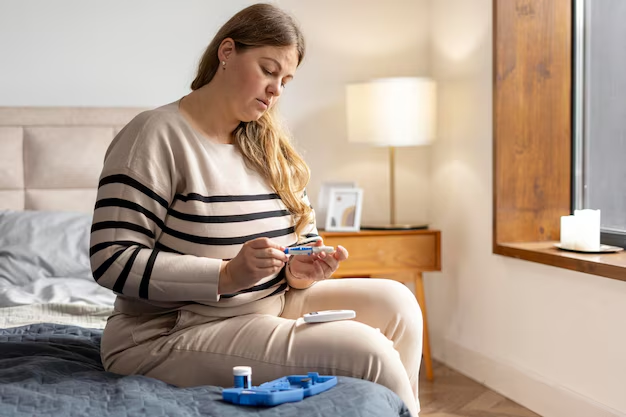
At‑Home Blood Tests and Online Lab Diagnostics: What You Need to Know Before You Order
If you could check your cholesterol, vitamin levels, or hormone balance without leaving your house, would you do it? For many people, online home blood tests have turned that question into a real choice, not just a hypothetical.
From simple finger-prick kits to mail-in lab panels, home diagnostics promise convenience, privacy, and faster insights. At the same time, they raise important questions: How accurate are they? When are they useful? And how do they fit into a broader approach to your health?
This guide offers a balanced, practical overview of online home blood tests and lab diagnostics so you can understand how they work, what they can (and cannot) tell you, and what to consider before using them.
What Are Online Home Blood Tests?
Online home blood tests are diagnostic tests you can order remotely (often online) and complete at home using a blood sample you collect yourself. The sample is then:
- Analyzed in a lab (most common), or
- Processed immediately by a device you use at home (less common for full panels, more typical for single tests like glucose).
The big shift is that you no longer need to:
- Schedule a traditional clinic visit just to get blood drawn
- Wait for a separate appointment to discuss results in person
Instead, the entire process—ordering, collecting, sending, and viewing results—can often happen from home, with digital access to your information.
How Home Blood Testing Typically Works
While services vary, most at-home lab testing journeys follow a similar pattern:
1. Ordering the Test
You usually start by:
- Choosing a test type or panel (e.g., “general health,” “hormones,” “cholesterol,” “food sensitivity screening,” etc.).
- Completing a basic questionnaire for safety and eligibility.
- Sometimes having your order authorized by a licensed clinician who reviews whether the test is appropriate.
2. Receiving the Kit
The kit usually includes:
- Collection tools: lancets (tiny needles), collection cards or tubes, alcohol wipes, bandages
- Instructions: step-by-step guide, sometimes with diagrams or links to videos
- Return packaging: a prepaid envelope or box to send your sample to the lab
3. Collecting Your Sample
Common methods include:
- Finger-prick blood onto a card (dried blood spot) or into a small vial
- Less commonly, a small venous blood draw done by a mobile phlebotomist or at a partner lab site arranged online
You typically:
- Wash and warm your hands
- Use the lancet on the side of your fingertip
- Collect blood drops as directed
- Seal and label the sample
- Package for mailing
4. Shipping and Lab Analysis
You then:
- Mail the sample back using the provided envelope
- The lab processes the sample using standard lab techniques, depending on the test
- Results are verified, and sometimes a clinician reviews them before release
5. Getting Your Results
Results are usually accessible:
- Via a secure online portal
- As a PDF report with:
- Your measured values
- Reference ranges (what is typically considered “in range”)
- Plain-language descriptions of what each marker represents
Some services offer optional follow-up consultations, while others simply provide results and educational information.
Types of Tests Commonly Available for Home Use
Not every test can be done at home, but many commonly requested labs have home-friendly formats.
1. General Health & Wellness Panels
These panels aim to give a broad snapshot of health markers. They may include:
- Cholesterol and lipids (total cholesterol, HDL, LDL, triglycerides)
- Blood sugar indicators (fasting glucose, sometimes HbA1c)
- Kidney function markers
- Liver enzymes
- Basic electrolytes and other routine markers
They may help someone track long-term trends, such as how lifestyle changes might relate to shifts in cholesterol or blood sugar indicators.
2. Nutritional and Vitamin Tests
These panels often focus on:
- Vitamin D
- Vitamin B12 and folate
- Iron-related markers (such as ferritin)
- Sometimes omega-3 and omega-6 fatty acid patterns
People use them to evaluate possible nutrient insufficiencies or to track the impact of diet changes, though interpretation often benefits from professional support.
3. Hormonal Tests
Some commonly available hormone-related tests include:
- Thyroid markers (TSH, and sometimes additional thyroid hormones or antibodies)
- Sex hormones like testosterone, estrogen, progesterone (often in specific panels)
- Stress-related markers such as cortisol (sometimes measured in saliva rather than blood)
These tests are often used as part of a broader exploration of symptoms, but they cannot diagnose conditions on their own.
4. Metabolic and Heart Health Markers
These might look at:
- Blood lipids and cholesterol subtypes
- Markers associated with inflammation related to cardiovascular risk
- Blood sugar control markers
They can contribute to a bigger picture of heart and metabolic health when interpreted alongside other clinical and lifestyle factors.
5. Infection and Immunity-Related Tests
Some home tests focus on:
- Antibody tests indicating past or recent exposure to certain infections
- Certain screening tests for sexually transmitted infections (STIs) using dried blood spots
Because test accuracy and follow-up are crucial in this area, many services build in mandatory clinical review or guidance.
6. Specialty and Niche Panels
You may also see:
- Allergen-focused blood tests related to specific IgE patterns
- Food sensitivity or intolerance panels based on reactivity markers
- Expanded panels around longevity, inflammation, or oxidative stress
These vary widely in clinical relevance, interpretation complexity, and how strongly they are supported by mainstream guidelines, so careful evaluation is important.
Benefits of Online Home Blood Tests
Home lab diagnostics appeal to people for several reasons. Some of the most commonly discussed advantages include:
1. Convenience and Flexibility
- No need to take time off for a clinic visit
- Testing can often be done at a convenient time at home
- Easy digital access to past and present results for tracking trends
This can be especially helpful for individuals who:
- Have limited mobility or transportation
- Live in areas with fewer health facilities nearby
- Have busy schedules or caregiving responsibilities
2. Privacy and Discretion
For certain types of testing—such as sexual health, hormone panels, or other sensitive topics—some people feel more comfortable collecting samples privately and accessing results online.
3. Greater Engagement With Personal Health Data
Many people appreciate being able to:
- See their numbers over time
- Learn what different markers mean
- Bring concrete data to conversations with health professionals
This can encourage a more active role in understanding one’s health, as long as results are interpreted cautiously and not used for self-diagnosis.
4. Monitoring Between Clinical Visits
For someone already under medical care, additional tests (if approved by their clinician) can sometimes:
- Help monitor trends between standard lab visits
- Offer another point of reference when adjusting lifestyle habits
This is highly individual and typically works best when coordinated with a healthcare professional.
Limitations and Risks to Be Aware Of
Home blood testing has clear appeal, but it also has important limitations that are crucial to understand.
1. Risk of Misinterpretation
Lab values can be:
- Affected by timing, recent food intake, stress, illness, or medications
- Within “normal” ranges yet still part of a health concern
- Outside “normal” ranges but not necessarily dangerous in context
Without professional interpretation, there is a risk of:
- Unnecessary worry over mild variations
- False reassurance when deeper assessment is actually needed
Results are one piece of a much larger puzzle, not a standalone verdict.
2. Accuracy Depends on Proper Collection
At a clinic, trained staff collect and handle samples. At home:
- Errors in finger-prick technique
- Insufficient sample volume
- Incorrect labeling or delayed mailing
can all affect the quality of the sample, and therefore the reliability of results. Some services address this with clear instructions and multiple checks, but user error is still possible.
3. Not a Replacement for Comprehensive Medical Evaluation
Even high-quality, lab-analyzed tests:
- Do not capture physical examinations, medical history, imaging, or other diagnostic tools
- May miss nuances that are only visible when a clinician looks at the whole person, not just lab numbers
Home tests are not emergency tools and are not designed for situations needing urgent assessment.
4. Incomplete Test Menus
Some tests:
- Require larger blood volumes, specialized handling, or immediate processing
- Are best performed in controlled settings
- Involve complex interpretation tied to current symptoms and findings
For these, in-person lab testing and professional follow-up remain the norm.
5. Emotional Impact of Results
Learning about lab values alone—especially if something is out of range—can be stressful. Without immediate access to clear guidance, people may:
- Turn to unreliable information to interpret results
- Worry excessively about values that may be only mildly abnormal or easily explained in context
Having a plan for follow-up before testing can help reduce uncertainty.
How Home Blood Tests Compare With Traditional Lab Testing
A simple way to frame the comparison is to look at a few key dimensions:
| Aspect | Home Blood Tests | Traditional Lab Testing |
|---|---|---|
| Where sample is taken | At home (self-collected) | In a clinic, lab, or hospital |
| Who collects sample | You (sometimes with remote guidance) | Trained phlebotomist or nurse |
| Convenience | High – no travel, flexible timing | Varies – requires appointment or lab visit |
| Scope of tests | Good for many basic and select advanced tests | Broad – includes full range of diagnostic tests |
| Interpretation | Often basic explanations; optional consults in some | Typically interpreted by your clinician |
| Suitability for urgent issues | Generally not suitable | Often central to urgent assessment |
They should be seen as complementary options, not direct substitutes in every situation.
Key Factors to Consider Before Ordering an At‑Home Test
If you’re thinking about using an online home blood test, it can help to walk through a short checklist.
1. Your Goal: What Are You Trying to Learn?
Ask yourself:
- Are you curious about general health markers?
- Wondering about specific symptoms?
- Looking to track trends over time?
Being clear about your goal can help you decide:
- Whether a test is appropriate at all
- Which type of panel is most relevant
- How you will use the information afterward
2. Is a Professional Already Involved in Your Care?
If you are:
- Under care for a known condition
- Taking regular medications
- Managing chronic health concerns
it may be useful to discuss any home testing plans with your healthcare provider in advance. They may:
- Offer insight into which tests are most meaningful
- Help interpret results in context
- Suggest combining home testing with clinic-based follow-up
3. Quality, Reliability, and Regulatory Considerations
While details differ by region, some areas to think about include:
- Whether the laboratory is properly accredited or certified
- Whether testing methods are aligned with standard lab practices for those markers
- How sample handling is managed to maintain stability during shipping
Reading about these aspects can help you distinguish between serious diagnostic services and more speculative or loosely regulated offerings.
4. Data Privacy and Result Handling
Many people are understandably concerned about how their health data is used and stored. You may want to look into:
- How your information is encrypted and protected
- Whether data might be used in de-identified form for research or analytics
- Who has access to your results (for example, you only, or you and associated clinicians)
Clarity on these points can make the experience feel safer and more transparent.
5. Cost and Value
Consider:
- Upfront cost of the test
- Whether tests you want are already available through your usual care setting
- Whether retesting will be needed, which can add to cost
For some, the convenience and immediate access to personal health data feel worth it; for others, conventional lab testing arranged through their usual care may be more economical or comprehensive.
Making Sense of Your Results Without Overreacting
Interpreting lab results is one of the most delicate parts of home testing. A balanced mindset can help.
Understanding Reference Ranges
Most reports include reference ranges, often described as:
- A span of values seen in a large group of people without known disease
- A guide, not a strict pass–fail line
A result slightly outside a reference range may:
- Be normal for you
- Reflect temporary factors (for example, recent exercise, illness, or hydration)
Conversely, a result in range does not guarantee the absence of disease, especially if symptoms or risk factors are present.
Looking for Patterns, Not Single Numbers
When possible, consider:
- Changes over time, rather than a single snapshot
- How multiple markers relate to one another (e.g., several markers of inflammation, not just one)
This is one reason why ongoing collaboration with a healthcare professional can be helpful: they can look at trends, context, and overall patterns.
When to Seek Follow-Up
While this guide cannot give medical advice, many people find it helpful to consider follow-up when:
- A result is significantly outside the listed range
- Multiple results are out of range in a related area
- You have persistent or worsening symptoms regardless of the numbers
Planning in advance who you will talk to about your results—a primary care provider, specialist, or other qualified professional—can reduce uncertainty.
Practical Tips for a Smoother Home Testing Experience
To help your at-home test go more smoothly and reduce common pitfalls, consider these practical points.
Before You Test
- Read all instructions carefully before you begin 📝
- Check if you need to:
- Fast for a certain number of hours
- Avoid specific foods, supplements, or strenuous activity
- Confirm any timing requirements, such as morning testing for certain hormones
During Sample Collection
- Wash your hands thoroughly with warm water to improve blood flow
- Use the recommended finger (often the ring or middle finger, side rather than pad)
- Stand or sit comfortably and take your time—rushing can lead to errors
- Make sure blood drops are collected as directed (e.g., filling circles completely on a card)
After Collection
- Double-check:
- Labels and identification information
- Seals on sample containers
- Mail your sample promptly, ideally the same day if recommended
- Keep any tracking information from the shipment
Quick Reference: Smart Steps for Using Online Home Blood Tests
Here is a concise checklist to keep in mind:
- ✅ Clarify your purpose – Know what you hope to learn or track.
- ✅ Check quality and accreditation – Look for information on lab standards.
- ✅ Understand the test limits – Recognize that a single panel is not a full health assessment.
- ✅ Prepare properly – Follow fasting and timing instructions closely.
- ✅ Collect carefully – Take your time with the finger-prick and labeling.
- ✅ Plan for interpretation – Decide in advance who you will talk to about results.
- ✅ Stay calm about numbers – Use results as information to explore, not as a final answer.
- ✅ Integrate with professional care when needed – Especially for abnormal results or ongoing symptoms.
Where Home Blood Tests Fit in a Bigger Health Picture
Online home blood tests and lab diagnostics represent a broader shift toward more accessible, user-centered health information. They can:
- Make regular monitoring more convenient
- Help people feel more engaged and informed
- Encourage earlier conversations about prevention and risk factors
At the same time, they work best when understood as:
- Tools for insight, not final verdicts
- One part of a multilayered approach that includes professional evaluation, physical examination, and sometimes imaging or additional tests
- A starting point for better questions, rather than a substitute for qualified guidance
For anyone exploring these options, staying grounded in balanced expectations, careful interpretation, and appropriate follow-up can turn home blood testing into a thoughtful addition to their health toolkit, rather than a source of confusion or anxiety.
Used wisely, online home blood tests can support a more informed and proactive relationship with your health—while still leaving room for the expertise, nuance, and human judgment that only a trained professional can provide.