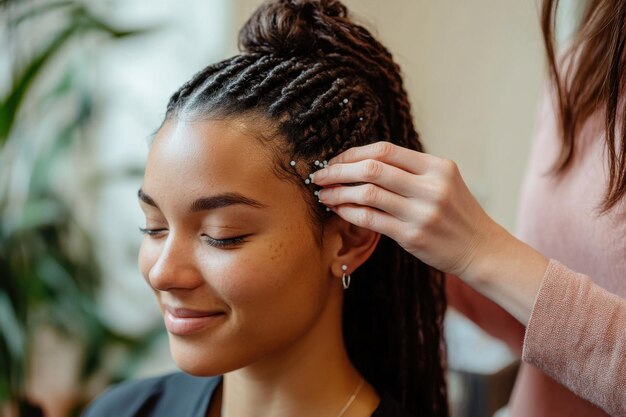
How To Choose the Right Box Braids Stylist Near You (and What Their Prices Really Mean)
The wrong box braids stylist can leave you with painful tension, frizz in a week, or a style that looks nothing like the photos you showed. The right stylist, on the other hand, can give you neat, long-lasting braids that protect your hair and make you feel confident for weeks.
Finding that right person—and understanding what you’re actually paying for—matters just as much as choosing the style itself.
This guide breaks down how to find the best box braids stylist near you, what to look for in their work, and how to make sense of box braids pricing so you know exactly what you’re getting into before you sit in the chair.
What Makes a “Good” Box Braids Stylist?
Before you start searching, it helps to know what separates a stylist who simply “does braids” from a stylist who truly specializes in box braids.
Key qualities of a strong box braid stylist
A solid box braids stylist typically shows:
Technical neatness
- Clean, consistent parting
- Even braid size from root to ends
- Secure but not overly tight roots
Hair health awareness
- Careful with your edges
- Willing to say a style isn’t ideal for your hair length/density
- Uses techniques that minimize tension
Style versatility
- Shows different lengths, sizes, and colors in their portfolio
- Comfortable with natural hair, relaxed hair, and various textures
Professionalism
- Clear pricing and policies
- Reasonable response times for inquiries
- Predictable scheduling and start times
A stylist who checks all these boxes may charge more than someone braiding out of their home with no structure—but that price often reflects skill, time, and your overall experience.
Where (and How) to Search for a Box Braids Stylist Near You
Instead of searching randomly and hoping for the best, you can use a more focused approach that saves time and reduces risk.
Start with word of mouth
Personal referrals still carry a lot of weight.
- Ask friends, family, co‑workers, or classmates whose braids you like.
- When you see someone with braids you admire (and it feels appropriate), you can ask:
“Your braids look great—do you mind sharing who did them?”
In-person referrals let you see how the braids are holding up over time, not just in freshly-taken photos.
Use online platforms and local searches
Online tools can help you discover stylists you might never meet through your personal circle.
You can search for phrases like:
- “box braids stylist near me”
- “knotless box braids [your city]”
- “protective style braider [your neighborhood]”
Then, as you look through results:
- Check if the stylist specializes in braids or offers them as one of many services.
- Look for updated galleries; frequent, recent posts suggest they’re actively braiding.
- Pay attention to captions that mention timing, pricing, or techniques—that often shows a more professional approach.
Narrowing down your list
Once you’ve found a handful of stylists:
- Save 3–7 stylists whose work you genuinely like.
- Compare their portfolios, not just their prices.
- Remove anyone whose work looks consistently frizzy, uneven, or overly tight at the roots.
How to Read a Stylist’s Portfolio Like a Pro
Many people skim through photos and decide based on one or two images. A closer look can tell you a lot more.
What to look for in braid photos
Focus on these details:
Parts and sections
- Are parts straight and consistent?
- Are boxes similar in size, or do they jump from tiny to large?
Roots and tension
- Do the roots look extremely pulled and shiny (often a sign of excess tension)?
- Are baby hairs and edges intact, or do they look stressed?
Braid length and fullness
- Do braids maintain their thickness from root to near the ends?
- Are ends sealed neatly (with hot water, rubber bands, or another method)?
Consistency across clients
- Do all clients show a similar standard of neatness, or just a few?
- Do different hair textures still look well-done?
Look for variety in styles
A strong box braids portfolio often includes:
- Different sizes: small, medium, jumbo
- Different lengths: bob-length, shoulder, mid-back, butt-length
- Variations: knotless braids, traditional braids, boho/goddess styles
- Color work: color blends, ombré, highlights
Seeing variety suggests the stylist adapts techniques to different preferences and hair types, rather than doing one exact pattern on everyone.
Questions to Ask Before You Book
A short conversation can tell you a lot about whether a stylist is a good match—not just in skill, but in communication and expectations.
Smart questions to ask a potential box braids stylist
You can send these questions by message or ask during a consultation:
“How long have you been doing box braids professionally?”
This gives a general sense of experience without demanding personal details.“Do you specialize in any particular type of braids (knotless, jumbo, small, etc.)?”
Helps you match your desired style to their strengths.“Do you work with my hair type/texture?”
For example: type 4 natural hair, relaxed hair, or transitioning hair.“How long does this style typically take?”
This helps you plan your day and judge whether time estimates seem realistic.“What’s included in the price?”
Clarify whether the price covers:- Washing and blow-drying
- Hair extensions
- Trimming ends
- Touch-ups or takedown services (often separate)
“What do you recommend I do to prepare my hair for the appointment?”
Their answer can show how much they value hair health and proper prep.“Do you offer any aftercare guidance for maintaining the braids?”
Stylists who care about longevity and hair health often have clear aftercare tips.
Red flags to watch for in replies
Some responses may signal it’s better to look elsewhere:
- Avoids answering basic questions about time or pricing
- Encourages extremely small braids on very short or fragile hair
- Dismisses concerns about tension with phrases like “tight means it lasts longer”
- Has unclear or shifting prices with no written explanation
Understanding Box Braids Pricing: What Affects the Cost?
Box braids prices vary widely—from budget options to premium experiences. Instead of focusing only on the number, it helps to understand what drives the price up or down.
Main factors that influence box braids cost
Size of the braids
- Smaller braids: more time, more parts, more precision → usually higher price
- Medium braids: a common middle ground
- Jumbo braids: fewer braids, less time → often more affordable
Length of the braids
- Bob/short: less hair extension and less braiding time
- Shoulder to mid-back: standard price range for many stylists
- Waist or butt-length: more hair, longer appointments → higher cost
Type of braids
- Traditional box braids: hair added at the root, visible knot at the base
- Knotless braids: hair is fed in gradually, often gentler on the scalp and more comfortable; many stylists charge more for this technique
- Boho/Goddess braids: curly pieces added for a textured look, usually at a premium to cover extra hair and time
Stylist’s experience and demand
- Stylists with strong reputations, packed schedules, and visible results often charge more.
- Newer stylists may set lower prices while building clientele.
Location
- Prices can vary between:
- Major cities vs. smaller towns
- High-traffic salon areas vs. home-based or mobile braiders
- Prices can vary between:
What’s included in the service
- Shampoo, condition, and blow-dry
- Hair extensions (type and brand)
- Extra services (touch-ups, styling, trims)
If one stylist seems “expensive,” it may be because their price includes everything, while another stylist’s base price may require you to handle washing and bring your own hair.
Sample Box Braids Pricing Breakdown 💸
Exact numbers vary, but it can help to see how different elements combine in a typical price structure.
| Factor | Lower Price Range Tends To Include | Higher Price Range Tends To Include |
|---|---|---|
| Braid Size | Jumbo / Medium | Small / Micro |
| Braid Length | Short / Shoulder | Mid-back to butt-length |
| Type | Traditional box braids | Knotless or boho/goddess styles |
| What’s Included | Braiding only (you come washed & stretched) | Wash, dry, extensions, styling, aftercare guidance |
| Stylist Experience | Newer or building clientele | Established, strong portfolio and demand |
| Setting | Home-based in some areas | Salon or studio in higher-rent areas |
This table isn’t a rule; it’s a pattern often seen in many markets. The main idea: lower upfront prices don’t always equal better value if you need to purchase hair, prep your own hair, and accept less durability or comfort.
How to Balance Price, Quality, and Your Own Needs
You don’t have to choose the cheapest stylist or the most expensive. The goal is to match a stylist’s offerings with your budget, hair needs, and comfort level.
Decide your non-negotiables
Before booking, think through what matters most to you:
Hair health priority
- If your edges are fragile or your scalp is sensitive, you may prioritize stylists known for gentle tension and protective techniques, even at a higher price.
Longevity of style
- If you want braids to last many weeks, you might value more precise, small-to-medium braids and detailed parting over speed.
Time vs. cost
- Quicker appointments may cost more, but save you hours.
- Lower-cost stylists might take significantly longer, which can still be fine if you’ve planned for it.
Experience vs. experimentation
- Some people are comfortable trying newer stylists as long as portfolios and communication seem reliable.
- Others prefer very established professionals for peace of mind.
If you know what you’re unwilling to compromise on (for example, scalp comfort), you can filter stylists more confidently.
What to Expect at a Box Braids Appointment
Knowing what generally happens can help you feel more prepared and relaxed.
Before the appointment
Stylists commonly expect some or all of the following:
- Hair clean and dry, unless washing is included in the service
- No heavy oils or creams, which can make gripping harder
- Detangled and stretched hair, if requested (for example, blow-dried or stretched using heatless methods)
Some stylists prefer to handle all prep themselves. Others want you to arrive prepped to save time. This should be clarified in advance.
During the appointment
A typical box braids session involves:
- Sectioning and parting your hair into squares (or triangles, rectangles, or other patterns, depending on your style).
- Adding braiding hair, if extensions are used.
- Braiding from root to ends, making sure tension is firm enough to stay but not so tight that it’s unbearable.
- Sealing the braids, often with hot water, rubber bands, or another method suitable for the chosen hair.
- Finishing touches, such as trimming flyaways, adding mousse, or tying your hair down with a scarf while products set.
After the appointment
You may leave with:
- A styling suggestion, such as keeping braids in a loose, low style for a few days
- Scalp care tips, like using a light oil or spray if needed
- Maintenance guidance, for example:
- Sleeping with a satin/silk scarf or bonnet
- How to refresh edges without causing breakage
- How long to keep the style in
Every stylist’s routine is different, but a thoughtful professional usually offers some form of aftercare guidance.
Comfort, Tension, and Scalp Health
Box braids are often worn as a protective style, but only when done with respect for the scalp and hairline.
Recognizing healthy vs. unhealthy tension
Some snugness is common, especially on day one. However, certain signs may suggest that the style is too tight for your hair and scalp:
- Severe, throbbing pain hours after leaving the chair
- Small bumps or inflammation along the hairline
- Difficulty moving facial muscles near the braids
- Braids that feel heavy enough to strain your neck or scalp
General experiences suggest that while mild tightness can be normal, ongoing pain or visible scalp irritation is not ideal for hair health.
Communicating with your stylist
Many clients feel hesitant to say anything, but your comfort and scalp matter.
You can phrase it gently:
- “These feel a bit tight, especially around my edges—would it be possible to loosen them slightly?”
- “My scalp is really sensitive; is there any way we can do lighter tension around the front?”
Stylists who value long-term client relationships usually appreciate this feedback and adjust where possible.
How Long Box Braids Typically Last
Longevity depends on several factors: your hair texture, braid size, daily activities, and how you care for them.
Common patterns people report:
- Jumbo braids: tend to look fresh for a shorter period because there are fewer braids and more hair in each section.
- Medium braids: often a balance between longevity and manageable installation time.
- Smaller braids: may stay neat longer but require more time and care to install and remove.
Scalp sweat, frequent workouts, and sleeping without a satin or silk covering can cause frizz faster, so aftercare plays a major role in how long your style looks fresh.
Simple Aftercare Tips to Protect Your Style and Hairline ✨
Here are broadly useful habits many people find helpful for maintaining braided styles:
🌙 Sleep protection
- Use a satin or silk scarf, bonnet, or pillowcase to reduce friction and frizz.
💧 Light scalp hydration
- If your scalp feels dry, some people use light oils or mists. Heavy products can cause buildup.
🧴 Gentle cleansing
- Some choose to clean their scalp with diluted shampoo or specialized sprays while wearing braids, depending on how their scalp reacts.
⏰ Reasonable wear time
- Keeping braids in for too long can lead to excessive tangling and shedding when you take them out, especially around edges and nape.
👐 Gentle takedown
- Removing braids patiently, detangling as you go, and giving your hair a break between installs can support overall hair health.
If you’re unsure what’s best for your hair type, this is a helpful topic to discuss with your stylist before or after your appointment.
Quick Checklist: Choosing the Best Box Braids Stylist Near You ✅
Use this as a snapshot when you’re ready to pick someone:
- Portfolio looks consistent and neat (parts, braid size, ends)
- Clients’ edges and hairlines look intact, not severely stressed
- Clear pricing with details on what’s included (hair, wash, prep)
- Realistic time estimates for installation
- Positive word-of-mouth or verified client feedback
- Professional communication, even if they’re an independent or home-based stylist
- Willingness to discuss tension, scalp sensitivity, and hair health
- Policies are explained upfront, including deposits, cancellations, and lateness
If a stylist meets most of these points and you like their work, they’re a strong candidate, even if they’re not the cheapest option.
Key Takeaways for Finding Your Ideal Box Braids Stylist 💡
- Look beyond price. Focus on skill, scalp awareness, and professionalism. Lower prices may mean more work on your part (like bringing hair) or less focus on long-term hair health.
- Study portfolios with intention. Check for neat parts, consistent sizes, and natural-looking tension at the roots, especially around edges.
- Ask clear questions. Clarify experience, what’s included, how to prepare your hair, and how long the style will take.
- Protect your scalp. Be honest about sensitivity, and speak up if braids feel excessively tight.
- Invest in aftercare. How you sleep, cleanse, and moisturize your scalp can make a big difference in both how long your style lasts and how your hair feels afterward.
Choosing a box braids stylist is about more than a single appointment—it’s about building a relationship with someone who understands your hair, your style preferences, and your comfort. With a thoughtful search and clear expectations around pricing and care, you can find a stylist who helps you enjoy beautiful braids and supports the long-term health of your hair.