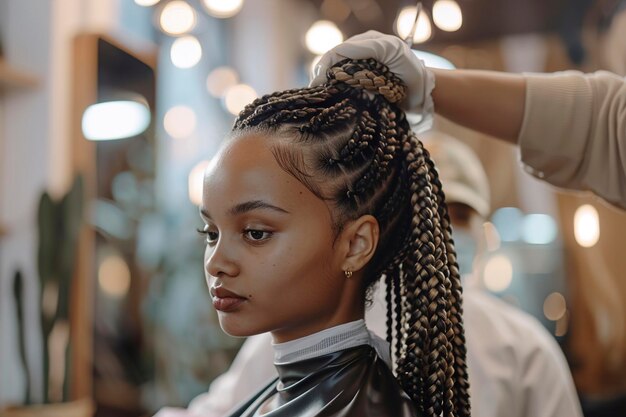
Choosing the Best African Braiding Salon for Cornrows, Box Braids & Protective Styles
The right African braiding salon can leave you feeling confident, comfortable, and proud of your hair. The wrong one can mean hours of discomfort, an uneven style, or even unnecessary stress on your scalp and hairline.
With so many salons and braiders to choose from, knowing how to pick the right place for cornrows, box braids, twists, and other protective hairstyles can make a big difference to your overall hair health and experience.
This guide walks through what to look for, what to ask, and how to prepare so you can walk into your next braiding appointment informed and empowered.
Why Your Choice of Braiding Salon Matters
Protective styles like cornrows, box braids, knotless braids, Marley twists, and faux locs are more than just a look. They interact closely with your natural hair and scalp for weeks at a time.
Choosing the right African braiding salon can influence:
- Scalp comfort – how tight (or gentle) the braids feel
- Hair health – whether your braids support growth or encourage breakage
- Style longevity – how long your style looks neat and polished
- Hygiene and safety – how clean, organized, and careful the environment is
- Overall experience – your comfort during what can be a long appointment
A salon that respects natural hair, scalp health, and proper technique tends to create styles that are not only beautiful, but also more sustainable over time.
Understanding Your Hair and Your Goals
Before you even look for a salon, it helps to be clear about what you need. That makes it easier to tell whether a braider is a good fit.
Know Your Hair Type and Condition
Different hair types and conditions respond differently to braids:
Texture & density
- Fine, low-density hair may need less tension and smaller sections to avoid breakage.
- Thick, high-density hair may require more time and a braider experienced with managing volume.
Length
- Short natural hair can be braided, but it may require specific techniques (like grip braiding) or added hair for hold.
- Longer hair gives more style options but can feel heavier when braided.
Scalp sensitivity & previous damage
- If your scalp tends to be tender, or you’ve experienced thinning edges, breakage, or irritation from past styles, it can be useful to mention this early when speaking to a stylist.
You don’t have to use technical terms, but a simple description like “My scalp is sensitive” or “My edges are fragile” gives braiders helpful information about how to approach your style.
Clarify Your Protective Style Goals
“Protective style” can mean different things for different people. Consider:
- Length of wear – Are you hoping to keep braids in for a couple of weeks or over a month?
- Maintenance level – Do you prefer low-maintenance styles or are you okay with more regular upkeep?
- Lifestyle – Do you work out often? Swim regularly? Wear helmets or headgear?
- Look and versatility – Are you aiming for sleek and small, big and boho, or something in between?
Knowing your priorities (longevity, comfort, versatility, or speed) helps you choose both the right style and the right salon capable of delivering it.
Key Factors to Consider When Choosing an African Braiding Salon
Once your goals are clear, you can start evaluating salons with more focus.
1. Specialization and Style Portfolio
Not every braider is equally skilled in every style. Many salons have certain specialties.
Look for:
Clear examples of your desired style
- Photos of cornrows, box braids, knotless braids, feed-in braids, twists, or locs that match the size, length, and neatness you want.
- Consistent quality from photo to photo (not just one perfect style).
Variety on different hair types
- Braids on natural hair of various lengths and textures.
- Edges and parts that look cared for, not over-pulled.
Recent work
- Updated styles show the salon is active and familiar with current techniques, such as knotless braids or feed-in cornrows.
If possible, view photos from more than one source: salon pages, tagged pictures from clients, or displayed photos inside the salon.
2. Cleanliness and Hygiene Standards
A clean environment is a basic expectation, but it also signals respect for clients and attention to detail.
When you visit or look for visual cues online, consider:
General cleanliness
- Floors, chairs, and stations look tidy.
- Hair and extensions are cleared between clients where possible.
Tools and supplies
- Combs, clips, and brushes appear clean.
- Towels and capes look freshly laundered.
- Products and hair extensions are stored neatly, not scattered on the floor.
Scalp and hair preparation practices
- Some salons prefer you arrive with clean, stretched hair; others offer washing and blow-drying.
- The key is that dirty or product-heavy hair is not routinely braided over without discussion.
Cleanliness often reflects a salon’s overall standards, including how carefully they handle your hair and scalp.
3. Tension and Technique
Tension is one of the most important factors for protective styles. Too much tension can lead to pain, bumps, and potential breakage or thinning, especially around the hairline.
Pay attention to:
How the braids look at the root in their photos:
- Do edges look extremely pulled, shiny, or inflamed?
- Are small children shown with very tight braids and visibly pulled hairlines? These can be warning signs.
How the salon speaks about tightness
- Some salons emphasize “very tight, long-lasting braids.” While neatness is desirable, extremely tight braids don’t necessarily equal healthy or longer-lasting styles.
- Look for language about comfort, scalp health, or gentle braiding as positive signs.
If possible, ask directly:
- “Do you braid with light to medium tension?”
- “If a style feels too tight, can we adjust while you’re braiding?”
A good braider usually believes that comfort and longevity can coexist when braids are done carefully.
4. Salon Environment and Customer Service
The atmosphere matters, especially for long appointments.
Notice:
⏱️ Time management
- Are appointment times generally respected, or do clients wait for long, unacknowledged periods?
- Does the salon clearly state approximate duration for styles?
🗣️ Communication
- Are stylists open to questions about size, parting, tension, and style variations?
- Do they listen when you describe your preferences?
💺 Comfort
- Seating, ventilation, entertainment (music, TV, Wi-Fi) may matter if you’ll be there for many hours.
- The salon's attitude toward breaks, snacks, or stretching during long sessions can also affect your comfort.
Many clients find that when a salon values respectful communication, it’s easier to discuss concerns mid-appointment, such as tension or style adjustments.
5. Pricing, Transparency, and Policies
Cost varies by location, style complexity, hair length, and time required. Transparency is often more important than the actual number.
Look for:
Clear price ranges for:
- Different styles (box braids, knotless, twists, cornrows).
- Different lengths (bob, mid-back, waist-length).
- Different sizes (small, medium, large).
What’s included
- Does the price include hair extensions, or do you bring your own?
- Is washing extra? Blow-drying? Take-down services?
Policies
- Deposits and cancellation rules.
- Late arrive policies.
- Children’s braiding rules and age requirements.
A salon that clearly explains pricing and policies helps you avoid surprises and plan your budget and schedule realistically.
Quick Comparison: What to Look For in a Braiding Salon 🧾
| Factor | Positive Signs ✅ | Possible Concerns ⚠️ |
|---|---|---|
| Portfolio | Clear photos, consistent quality, styles like yours | Few photos, inconsistent results |
| Cleanliness | Tidy stations, clean tools, organized hair/products | Dirty floors, clutter, visibly reused towels |
| Tension & Technique | Natural-looking roots, comfortable styles mentioned | Over-pulled edges, “very tight” focus |
| Communication | Answers questions, explains options, listens | Dismissive, rushed, avoids tension discussion |
| Pricing & Policies | Transparent pricing, clear policies | Vague prices, unclear about what’s included |
Researching African Braiding Salons: Where and How to Start
Once you know what you’re looking for, you can start narrowing your options.
Online Searches and Social Platforms
Many people begin with phrases like:
- “African braiding salon near me”
- “Box braids stylist [your city]”
- “Cornrows stylist for natural hair”
From there, you can:
- Browse photo galleries or portfolios.
- Read recent reviews for mentions of:
- Tension (too tight / just right)
- Professionalism
- Style longevity
- Cleanliness and atmosphere
Look for patterns over time rather than focusing on a single very positive or negative opinion.
Word of Mouth and Personal Recommendations
In many communities, the best braiders are discovered through:
- Friends, family, coworkers, or classmates whose style you admire
- Community spaces like churches, local events, or cultural centers
- Social circles and group chats focused on natural hair
When asking for recommendations, go beyond “Who did your braids?” and ask:
- “Was your scalp comfortable?”
- “How was the experience start to finish?”
- “Did they listen when you asked for adjustments?”
These specifics help you assess whether the salon fits your priorities.
Testing the Waters: Consultations and Small Styles
If you’re unsure about a new salon, you can:
Book a consultation if offered
- Use this time to discuss your hair history, sensitivity, and desired style.
- Observe how they examine your hair and answer your questions.
Start with a smaller style
- Simple cornrows, large box braids, or a partial style may be quicker and lower risk than committing to a full head of very small braids with a new stylist.
This “trial run” can give you a feel for tension, technique, and overall comfort before you book a larger, longer, or more expensive style.
Matching the Salon to Your Desired Style
Different protective styles come with different requirements. It helps to choose a salon experienced with the specific look you want.
Cornrows and Feed-In Braids
For cornrows (with or without added hair):
- Look for crisp, straight parts and even-sized rows.
- The braids should lay flat against the scalp without visible bumps or swelling.
- Feed-in styles (where the braider gradually adds hair) should look smooth, with no bulky knots at the front.
Cornrows are often quicker than full box braids, but they still require skill, especially for intricate or geometric designs.
Box Braids and Knotless Braids
These are some of the most popular protective styles, and each has its own look and feel:
Traditional box braids
- Hair is usually gripped at the root with a small knot.
- Often fuller at the base and may feel slightly heavier at the root.
Knotless braids
- The braider typically starts with your natural hair and feeds in extensions gradually.
- Many clients find this approach lighter and more flexible at the roots.
When evaluating a salon’s box braid or knotless braid work, notice:
- The neatness of parts (box, triangle, or custom).
- The uniformity of braid size from root to tip.
- How the hairline looks—smooth but not overly shiny or inflamed.
If you have a sensitive hairline, it can be helpful to discuss larger parts around the edges or slightly looser braids there.
Twists, Faux Locs, and Other Protective Styles
Many African braiding salons also offer:
- Senegalese twists / Marley twists / passion twists
- Faux locs (crochet or individually wrapped)
- Goddess braids / boho styles with curly ends
These can vary widely in method and appearance. When choosing a salon for these:
- Focus on how natural the twists or locs look at the root and along the length.
- Look for secure ends that don’t unravel quickly, yet don’t look burned or overly stiff.
- Consider the weight of the style—very thick or long locs and twists can be heavy, especially on fine hair.
Ask how the salon typically installs these styles and what they suggest for your hair length and density.
Questions to Ask Before Booking
Having a short list of questions makes it easier to compare salons and set expectations.
Here are some useful examples:
About Technique and Hair Health
- “How do you manage tension around the hairline?”
- “If my scalp feels tight while you’re braiding, can we loosen some braids?”
- “Do you recommend any particular braid size for my hair thickness?”
About Preparation
- “Do you prefer that I come with my hair washed and stretched, or do you offer those services here?”
- “Are there any products you prefer I avoid before the appointment?”
About Hair Extensions and Products
- “Is braiding hair included in the price, or should I bring my own?”
- “What type of hair do you usually use for this style?”
- “Do you use any particular gels or creams at the roots?”
About Time and Pricing
- “About how long does this style usually take on hair like mine?”
- “What is the price range for medium-sized [style] at [length]?”
- “Are there extra costs for things like curly ends or color blends?”
The way the salon answers is as important as what they answer. Clear, patient responses often reflect a more customer-centered approach.
Handy Pre-Booking Checklist 📝
Use this quick list before you commit to a salon:
- ✅ I’ve seen clear photos of my desired style from this salon
- ✅ I’m comfortable with their cleanliness and environment
- ✅ They appear to respect tension and hair health
- ✅ Pricing and what’s included are clearly explained
- ✅ I feel able to ask questions and share concerns
- ✅ Their timing and location work for my schedule
If several of these feel uncertain, it may be worth exploring additional options.
Preparing for Your Appointment
Good preparation supports both your hair and your overall experience at the salon.
The Day Before or Morning Of
Many salons request that clients arrive with clean, dry, product-light hair, unless a wash service is included. Common preparation steps include:
Detangling gently
- Using a wide-tooth comb or fingers to remove major knots.
- Working in sections, especially for very thick or coily hair.
Avoiding heavy oils or butters right before braiding
- Many braiders prefer hair that is clean and lightly moisturized rather than coated, as heavy buildup can be harder to grip and may affect how long the style lasts.
Clarifying your style choice
- Saving 2–5 inspiration photos that clearly show:
- Size of the braids or cornrows
- Length
- Colors or accessories (if desired)
- Saving 2–5 inspiration photos that clearly show:
Being clear upfront reduces misunderstanding and helps the stylist estimate time more accurately.
What to Bring With You
A braiding session can last several hours, especially for small or longer styles. Some people find it helpful to bring:
- 🎧 Headphones or earbuds
- 📱 Charged device, book, or other quiet entertainment
- 🧃 Water and light snacks (if allowed by the salon)
- 🧥 A sweater or layer in case the salon is cool
If tension and scalp comfort are particular concerns, you may also want to bring up this topic again politely before the stylist starts.
During the Appointment: Advocating for Your Comfort
Even when you’ve chosen carefully, communication during the appointment still matters.
Speaking Up About Tension
It’s not unusual for scalp tenderness to build after a few rows are completed. If you notice it feels extremely tight or painful:
- It can be helpful to say something early, such as:
- “These feel a bit tight around my edges. Could we use slightly less tension there?”
- “My scalp is quite sensitive—could you loosen this section a little?”
Many braiders appreciate this feedback, as it helps them adjust to your comfort level and avoid issues later.
Checking In Periodically
For long sessions, some clients find it useful to:
- Ask for short breaks to stand, stretch, or use the restroom.
- Gently confirm style details partway through, especially if you’re particular about size or length.
If the salon is receptive to these requests, it can indicate a more customer-focused approach.
Aftercare and Future Appointments
Choosing the right salon is partly about what happens after you leave.
Basic Braid Care Principles
Most braiding salons offer general aftercare advice such as:
Gentle scalp care
- Some people use light oils, mists, or scalp sprays for comfort and moisture, being careful not to overload the hair.
Night protection
- Using a satin or silk scarf, bonnet, or pillowcase can help reduce frizz and rubbing.
Reasonable wear time
- Keeping braids or cornrows in for a limited time can help prevent matting, buildup, and tangling at the roots.
If you’re unsure, you can ask your braider for general guidance suitable for your style and lifestyle.
Evaluating the Experience
When it’s time to remove your style, you can reflect on:
- How your scalp and hairline look and feel afterward
- Whether your hair feels dry, tangled, or reasonably manageable
- How long the style stayed neat relative to your expectations
- How you felt about the overall salon environment and communication
This reflection can help you decide whether to return to the same salon, try a different braider at the same location, or explore new options.
Putting It All Together
Finding the right African braiding salon for cornrows, box braids, and other protective hairstyles is less about luck and more about clarity, observation, and communication.
When you:
- Understand your hair type, scalp sensitivity, and style goals
- Evaluate salons for portfolio quality, cleanliness, technique, and transparency
- Ask thoughtful questions about tension, preparation, pricing, and time
- Prepare yourself and your hair for the appointment
- Speak up respectfully during the process and reflect afterward
…you create a much better chance of walking away with a style that is not only beautiful, but also comfortable and supportive of your hair’s overall health.
Protective styles are meant to protect, not cause stress. With the right salon match, your braids can be a source of confidence, convenience, and creativity that fits comfortably into your broader health and beauty routine.